As a premium engineering brand with 20 years of experience, Nordstone stands as a premier choice among Shell & Tube Heat Exchangers manufacturers in UAE.
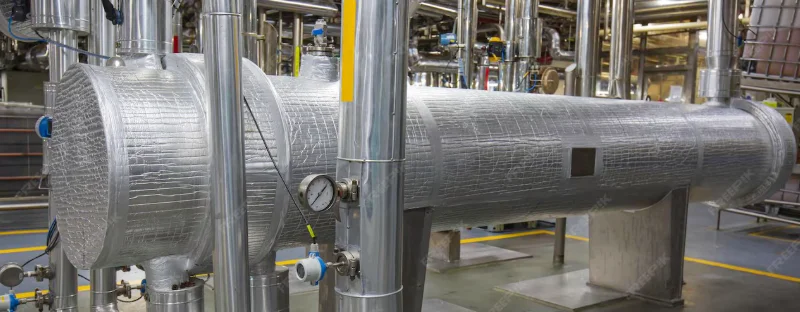
Leveraging over three decades of core industrial expertise, we specialize in designing and manufacturing high-performance, custom-engineered thermal management systems. Engineered specifically for the extreme pressures, severe temperatures, and corrosive environments inherent to the Middle East, our custom industrial heat exchangers offer maximum thermal efficiency and unmatched durability. From processing units in the local Oil & Gas sector to demanding mission-critical applications in Defence, our state-of-the-art manufacturing facility combines precision CNC drilling, orbital welding, and meticulous quality control.
Every unit is engineered to adhere strictly to international standards, including ASME Section VIII Division 1, TEMA (Class R, C, and B), and API, ensuring flawless reliability. Whether you require standard configurations or bespoke process solutions, our expert engineering team delivers robust, certified thermal systems built for longevity.
o discuss your exact thermal specifications, request a quote, or evaluate compliance documentation with our engineering specialists, please reach out directly through our Contact Us page.
Frequently Asked Questions (FAQs)
1. Why is Nordstone considered a top-tier Shell & Tube Heat Exchanger manufacturer in the UAE?
Nordstone blends 20 years of technical expertise with over three decades of foundational manufacturing excellence in industrial vessels. Our state-of-the-art manufacturing infrastructure, precision engineering processes (like automated orbital welding and micro-expansion), and strict compliance with global codes make us a reliable partner for high-performance thermal systems across the Emirates.
2. Which international design and manufacturing codes do your thermal systems comply with?
All our shell and tube heat exchangers are designed, fabricated, and rigorously tested in absolute compliance with global quality and safety benchmarks, including:
- ASME Section VIII Div 1 (Pressure Vessels)
- TEMA Class R, C, and B (Tubular Exchanger Manufacturers Association)
- API 660 (Proprietary refinery applications)
- ISO 9001 Quality Management Systems
3. What industries in the UAE do you primarily serve?
We design and supply heavy-duty thermal systems for critical applications across multiple high-stakes sectors, including:
- Oil & Gas: Upstream processing, offshore platforms, and downstream refining.
- Defence: Heavy cooling systems built to military-grade specifications.
- Chemical Processing: Acid and aggressive chemical heating/cooling units.
- Power Generation & Marine: Turbine condensers, intercoolers, and aftercoolers.
4. Can Nordstone build custom heat exchangers for extreme Middle Eastern environments?
Yes. We specialize in custom-engineered solutions. Our engineering team designs systems tailored to withstand the high ambient temperatures, high humidity, and highly corrosive maritime environments characteristic of the UAE and broader GCC region.
5. What materials of construction (MOC) do you use to combat severe corrosion?
Depending on fluid properties and operating conditions, we utilize a wide variety of corrosion-resistant alloys, including:
- Carbon Steel (HIC tested for sour oil environments)
- Stainless Steel (Grades 304L, 316L, 904L)
- Duplex and Super Duplex Stainless Steel
- Copper-Nickel Alloys (Cu-Ni 70/30, 90/10) for seawater cooling applications
- Titanium and Hastelloy for highly aggressive chemical processes
6. What types of Shell & Tube Heat Exchangers do you manufacture?
We design and manufacture all major configurations classified by TEMA, including:
- Fixed Tube Sheet: Ideal for low-to-moderate temperature differentials where mechanical shell cleaning is not critical.
- U-Tube Bundle: Allows for unrestricted thermal expansion and easy bundle removal for cleaning.
- Floating Head (Split Ring or Lantern Ring): Best for high-temperature differentials and internal tube inspection/cleaning. piranhaecotech.com
7. How does Nordstone optimize thermal efficiency for custom builds?
Our engineering team utilizes advanced thermodynamic and mechanical design software to calculate optimal fluid velocities, pressure drops, baffle spacing, and pitch layouts. By precision-modeling these variables, we deliver the highest possible heat transfer coefficient while eliminating tube-vibration issues.
8. What quality control testing procedures are carried out at your facility?
Every heat exchanger undergoes strict quality testing prior to delivery. Our standard non-destructive testing (NDT) regimen includes:
www.unitedengineersindia.com
- Hydrostatic testing (up to high-pressure ratings)
- Pneumatic testing
- Radiography (X-ray testing) of critical weld joints
- Dye penetrant and ultrasonic inspection
9. Can you manufacture units capable of handling high operating pressures and temperatures?
Yes. Supported by our deep roots in heavy industrial pressure vessel manufacturing, our systems are built to withstand extreme operating conditions—comfortably managing pressures up to 400 bar and extreme temperatures reaching up to 1000∘C based on specific process requirements.
10. Do you provide replacements or retubing services for existing units in the UAE?
Alongside manufacturing new units, we offer engineering support for existing installations. This includes reverse engineering old equipment, full or partial retubing, tube bundle replacements, and upgrading materials to increase the lifespan of your current systems.
11. What is the difference between TEMA Class R, C, and B?
These designations define the severity of service conditions:
- TEMA Class R: Designed for severe petroleum and refinery processing applications.
- TEMA Class B: Configured for chemical process service where safety and longevity are paramount.
- TEMA Class C: Engineered for general commercial and industrial applications where budget and space are major considerations.
12. How do your heat exchangers prevent cross-contamination between fluids?
We implement precision tube-to-tube-sheet expansion techniques, backed by automated strength welding or seal welding. For high-risk applications, we can engineer double tube-sheet designs, ensuring that any minor leak is vented externally rather than contaminating the alternate process fluid.
13. How does a shell and tube design compare to a plate heat exchanger?
While plate exchangers are highly compact, shell and tube heat exchangers remain the undisputed industry standard for critical processing because they easily handle high pressures, withstand extreme thermal shocks, minimize pressure drops, and allow for direct mechanical cleaning.
14. What are the typical lead times for an industrial build at Nordstone?
Lead times vary based on configuration complexity, material availability (especially for exotic alloys), and engineering approvals. Because our state-of-the-art facility is located within close operational proximity to the UAE market, we offer highly competitive project timelines compared to international imports.
15. How can I get an engineering evaluation and a price quotation?
To obtain an accurate technical proposal, please share your process data sheets (including fluid types, flow rates, inlet/outlet temperatures, and pressure limitations). You can securely upload your design files and contact our technical sales specialists directly via our Contact Us page.