As one of the foremost industrial equipment manufacturers in the UAE with 20 years of experience, Nordstone specializes in engineering high-performance thermal systems that withstand the Middle East’s intense ambient temperatures.
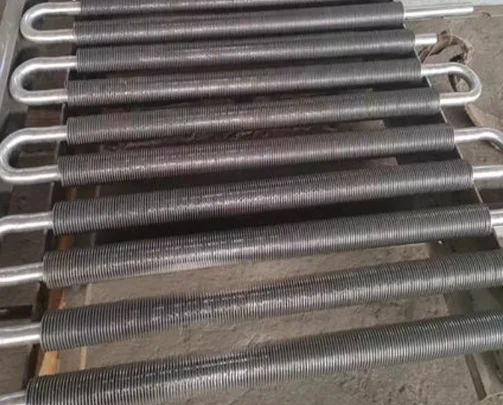
Our custom-engineered Finned Tube Heat Exchangers are meticulously designed to maximize heat transfer surface area, offering space-saving and highly efficient thermal transfer solutions for air and fluid systems across the region. By utilizing advanced thermal design software, we optimize configuration parameters—such as fin density, tube pitch, and material compatibility—to ensure our systems deliver unmatched thermal efficiency.
Whether integrated into gas processing plants, HVAC systems, or power generation facilities, every unit is manufactured in our state-of-the-art facility under strict API, ASME, and ISO quality controls, ensuring dependable operation under extreme pressures and highly corrosive desert environments.
Frequently Asked Questions
1. What are finned tube heat exchangers, and how do they function?
A finned tube heat exchanger consists of standard tubes surrounded by an extended external surface area in the form of fins. Heat transfers from the hot fluid flowing inside the tubes to the cooler fluid (typically air or gas) passing over the outside of the tubes. The added fins increase the external surface area significantly, compensating for the lower heat transfer coefficient of gases compared to liquids, resulting in efficient thermal exchange.
2. Why are finned tube heat exchangers vital for industries in the UAE?
In the UAE, where ambient air temperatures frequently exceed 45°C, industrial cooling systems face severe thermal loads. Finned tube heat exchangers maximize atmospheric cooling efficiency without requiring extensive water consumption. This makes them ideal for localized heavy industries, desert oil fields, and marine applications where resource conservation and reliable thermal dissipation are critical.
3. What types of fin designs does Nordstone manufacture?
We engineer several high-efficiency fin configurations tailored to specific industrial environments:
- L-Foot / Wrapped Fins: Excellent for moderate temperatures and atmospheric corrosion protection.
- Extruded Fins: Provide a continuous metallurgical bond, offering outstanding heat transfer and superior protection against harsh, salty coastal air.
- Embedded (G-Fins): Designed for high-temperature and high-vibration applications, where the fin is mechanically locked into a groove cut into the tube wall.
4. Which industries rely on your thermal transfer solutions?
Backed by our decades of excellence, our custom heat exchangers support critical applications across various demanding sectors, including:
- Oil & Gas: Upstream gas cooling, intercoolers, and refinery process cooling.
- Power Generation: Turbine air intake cooling and radiator systems.
- HVAC & Industrial Refrigeration: Large-scale commercial chillers and condensing units.
- Defence & Marine: Heavy-duty, ruggedized cooling systems for tactical and marine vessels.
5. What materials are used to withstand the corrosive environments of the UAE?
To fight atmospheric salinity, high humidity, and sour process gases, we utilize premium corrosion-resistant materials. Tube options include Carbon Steel, Stainless Steel (304L, 316L), Duplex/Super Duplex, and Copper-Nickel alloys. Fins are typically manufactured from high-thermal-conductivity Aluminum or Copper, and can be specified with specialized marine-grade anti-corrosion coatings.
6. Can Nordstone build custom heat exchangers for existing industrial setups?
Yes. Our expert engineering team specializes in both greenfield custom designs and drop-in replacements for brownfield revamps. We conduct thorough mechanical and thermal evaluations to ensure the new finned tube bundle perfectly matches your existing footprints, structural steel anchors, and process flow connections.
7. What international engineering standards do your products comply with?
Every vessel and heat exchanger bundle we produce meets or exceeds international design codes. We are fully certified to design and manufacture under ASME Section VIII Div. 1 & 2, TEMA (Tubular Exchanger Manufacturers Association) standards, API 661 (for air-cooled heat exchangers), and ISO 9001/14001/45001 quality and safety management systems.
8. How do you optimize the thermal efficiency of your finned tubes?
We utilize advanced thermal computation tools like ASPEN B-JAC and HTRI, alongside customized in-house engineering programs. By analyzing fluid dynamics, pressure drops, and thermal resistance layers, we determine the exact fin height, thickness, and spacing needed to unlock maximum thermal output within the smallest physical footprint.
9. What is the difference between an air-cooled heat exchanger and a finned tube heat exchanger?
A finned tube heat exchanger is the core component (the bundle) that facilitates the thermal swap. An Air-Cooled Heat Exchanger (ACHE) is the complete structural system that houses these finned tube bundles, combined with axial fans, plenums, louvers, and motors to force air across the fins. Nordstone manufactures both individual replacement bundles and fully integrated ACHE skid systems.
10. How does Nordstone ensure the structural integrity of units handling high pressures?
High-pressure applications require rigorous mechanical calculations. Our engineering team utilizes ANSYS for Finite Element Analysis (FEA) to simulate localized stresses, thermal expansion rates, and seismic or wind loads typical of the UAE region. This ensures our headers, tube sheets, and joints remain securely sealed under variable cyclic pressures.
nordstonein.com
11. What quality control testing do you perform before delivery?
Quality control is embedded from start to finish. Our non-destructive testing (NDT) matrix includes:
nordstonein.com
- Hydrostatic and pneumatic pressure testing. nordstoneng.com
- Radiographic testing (RT) and Ultrasonic testing (UT) for weld integrity.
- Helium leak detection for ultra-critical gas applications.
- Dye penetrant and magnetic particle inspections.
12. How do fouling and dust accumulation affect these systems in the UAE, and how do you mitigate it?
Desert dust and sand storms can form an insulative fouling layer on fins, which degrades heat transfer efficiency over time. We combat this by optimizing fin pitch (wider spacing prevents clogging) and selecting smooth fin profiles that resist debris buildup. Additionally, our designs ensure easy access for high-pressure water washing or chemical cleaning.
13. Can your systems handle extreme process temperatures?
Yes. By using mechanically bonded embedded G-fins or high-frequency welded fins on robust alloy tubes, our heat exchangers can handle process fluids entering at temperatures well over 350°C without risk of the fins loosening or losing thermal contact with the base tube.
14. What are the advantages of choosing Nordstone over global competitors?
With 20 years of local engineering experience and an advanced manufacturing site right in the region, we combine global engineering standards with deep regional insights. This allows us to provide rapid turnaround times, local third-party inspections, and dedicated post-installation engineering support that overseas suppliers simply cannot match.
15. How can we initiate a project proposal or get a quotation?
To discuss your specific thermal parameters, fluid profiles, and space constraints, you can share your process datasheets directly with our engineering sales team. Please visit our dedicated contact portal to submit your technical requirements: Contact Us.