As a leading name among pressurized buffer tank manufacturers in UAE, Nordstone delivers high-performance thermal energy storage and pressure stabilization solutions tailored to the region’s demanding industrial and HVAC climates.
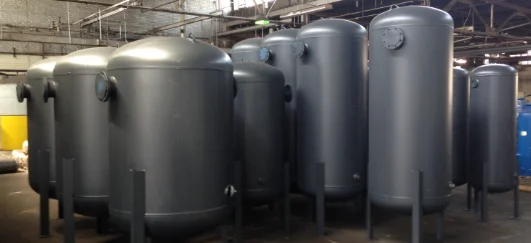
acked by over 20 years of precision engineering experience, we design and manufacture ASME, API, and ISO-certified industrial chilled water buffer tanks and hot water buffer vessels built to withstand extreme operating pressures and corrosive environments. From large-scale district cooling plants in Dubai to critical oil and gas installations in Abu Dhabi, our state-of-the-art facilities produce custom-engineered carbon steel and stainless steel pressure vessels that optimize system efficiency, eliminate short-cycling, and ensure seamless hydraulic separation.
Whether your project requires heavy-duty insulation for outdoor thermal efficiency or specialized internal linings for chemical compatibility, Nordstone provides the localized engineering expertise, rapid lead times, and rigorous quality control required to keep your critical infrastructure running flawlessly.
To discuss your project specifications or request a custom technical data sheet, reach out to our engineering team today through our Contact Us page.
Frequently Asked Questions
1. What is the primary function of a pressurized buffer tank?
A pressurized buffer tank acts as a thermal reservoir and hydraulic stabilizer in closed-loop heating or cooling systems. It increases the overall fluid volume of the system, which prevents the chiller or boiler from short-cycling (turning on and off too frequently). This protects your compressor or burner from premature wear and drastically improves energy efficiency.
2. What certifications do Nordstone pressurized buffer tanks carry?
Our vessels are manufactured in strict compliance with international pressure vessel standards. Depending on your specific project requirements, we provide buffer tanks carrying ASME Section VIII Div 1, API, and ISO 9001 certifications, ensuring compliance with UAE municipal and federal safety regulations.
3. Why is a buffer tank critical for chilled water systems in the UAE?
Due to the ambient high temperatures in the UAE, industrial HVAC and district cooling systems operate under intense thermal loads. A chilled water buffer tank provides a dedicated volume of stored cooling capacity. This prevents the system temperature from spiking during sudden load changes and ensures a stable supply of chilled water.
4. What materials do you use to manufacture buffer vessels?
We primarily manufacture tanks from high-tensile Carbon Steel (ideal for closed-loop, non-corrosive thermal systems) and various grades of Stainless Steel (SS304, SS316, or Duplex) for systems handling corrosive fluids or requiring stringent hygienic standards.
5. Can Nordstone custom-engineer a buffer tank for limited space?
Yes. With over two decades of engineering experience, our team specializes in custom footprints. We can design vertical or horizontal configurations, adjust nozzle orientations, and alter height-to-diameter ratios to fit perfectly within tight mechanical rooms or containerized plants.
6. What pressure ratings can your tanks handle?
We design and manufacture pressurized buffer tanks across a broad spectrum of pressure ratings, typically ranging from standard 6 bar, 10 bar, and 16 bar systems up to high-pressure industrial applications exceeding 25+ bar, fully validated through rigorous hydrostatic testing.
7. How does Nordstone prevent thermal loss in the UAE climate?
We offer advanced insulation options engineered specifically for the Middle Eastern climate. For chilled water systems, we use high-density, closed-cell polyurethane foam (injection or spray) wrapped in a weather-proof aluminum or fiberglass jacket to eliminate condensation and ambient heat gain.
8. What type of internal linings do you offer?
To prevent internal corrosion from aggressive water chemistry or chemical additives, we offer specialized internal coatings, including baked epoxy linings, cement linings, and glass/porcelain linings, depending on the operational temperature and fluid composition.
9. What is short-cycling, and how does a buffer tank prevent it?
Short-cycling occurs when a cooling or heating source meets its temperature setpoint too quickly because the system’s fluid volume is too low. The system shuts off, only to turn back on moments later. By adding fluid volume, a buffer tank lengthens the run-time of the compressor or burner, ensuring smooth, efficient operational cycles.
10. Do your buffer tanks include internal baffles?
Yes, we can equip our tanks with internal baffle plates or diffusers. These components are strategically designed to prevent fluid mixing, promoting proper thermal stratification (separating hot and cold layers) and ensuring low-velocity hydraulic separation.
11. What industries in the UAE do you serve?
Nordstone supplies pressure vessels across a diverse range of sectors, including District Cooling, Oil & Gas, Power Generation, Manufacturing & Process Industries, Pharmaceuticals, and Defence infrastructure.
12. Are your tanks suitable for outdoor installation in coastal UAE areas?
Absolutely. For coastal or highly humid environments prone to marine corrosion, we apply industrial-grade exterior epoxy paint systems and utilize marine-grade protective jackets over the insulation to guarantee long-term durability.
13. What standard accessories come with a Nordstone buffer tank?
Standard inclusions feature heavy-duty lifting lugs, support legs or skirts, air vent connections, drain ports, and multiple sensor/thermowell ports. We can also integrate level indicators, safety relief valves, and pressure gauges upon request.
14. What is the typical lifespan of a Nordstone pressurized vessel?
When engineered and maintained correctly, our tanks are built for an operational lifespan exceeding 20 to 25 years. Our use of premium raw materials, precise welding automation, and strict non-destructive testing (NDT) ensures maximum asset longevity.
15. How can I get a technical quote for a project in Dubai or Abu Dhabi?
You can share your specific design parameters—such as volume, design pressure, operating temperature, fluid type, and space constraints—by visiting our Contact Us page. Our engineering sales team will provide a comprehensive technical submittal and commercial proposal.