As one of the leading chemical storage tanks manufacturers in UAE, Nordstone brings 20 years of experience in delivering high-performance, precision-engineered industrial containment systems.
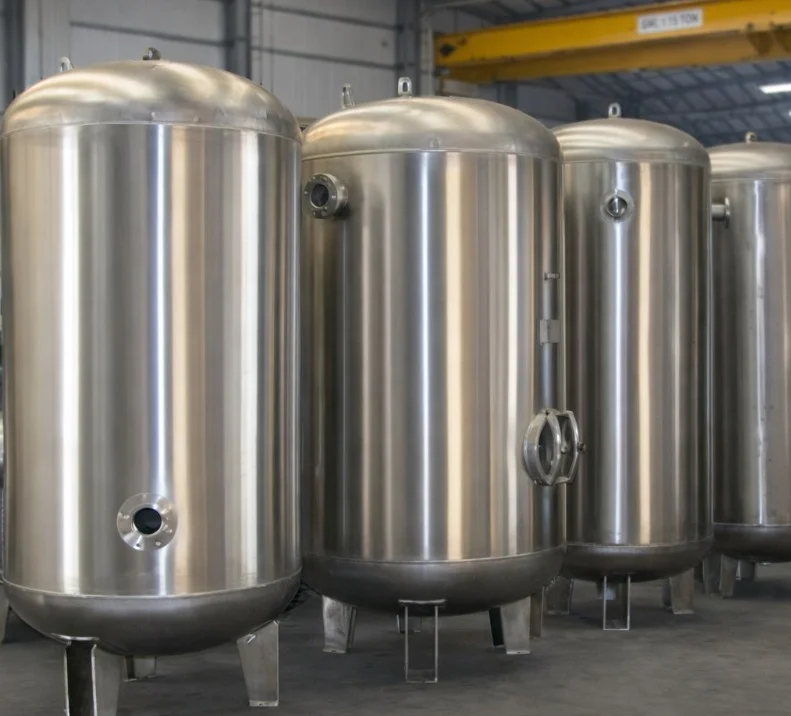
Operating a state-of-the-art facility, our expert engineering teams specialize in custom-built carbon steel, stainless steel, and exotic alloy storage tanks that comply stringently with API 650, API 620, and ASME Section VIII codes.
Designed to withstand severe operating conditions—including high pressures, extreme temperatures, and aggressively corrosive industrial environments—our systems serve critical operations across the Oil & Gas, petrochemical, defense, and water treatment sectors.
Backed by API, ASME, and ISO certifications, Nordstone integrates advanced fabrication techniques with meticulous non-destructive testing (NDT) to ensure absolute structural integrity, environmental isolation, and long operational life.
From initial conceptual design to localized deployment in Dubai, Abu Dhabi, and the Northern Emirates, we deliver engineered safety that prevents hazardous leaks, secures asset reliability, and ensures compliance with federal environmental mandates.
To discuss your facility’s specific chemical compatibility and volumetric requirements, connect with our engineering desk directly through our Contact Us portal.
Frequently Asked Questions
1. What design codes do your chemical storage tanks in the UAE comply with?
Our tanks are engineered and manufactured in strict compliance with international standards, primarily API 650 (welded tanks for oil and chemical storage), API 620 (design and construction of large, welded, low-pressure storage tanks), and ASME Section VIII Div. 1 & 2 for pressurized containment systems. This guarantees compliance with UAE municipal regulations and international safety guidelines.
2. What materials do you use to manufacture chemical storage tanks?
We select specialized materials based on precise chemical compatibility matrices. Our production line processes high-grade carbon steel (SA516 Gr. 60/70), stainless steel grades (SS304, SS316, SS316L, SS904L), and advanced exotic alloys such as Hastelloy, Monel, Inconel, and Titanium to survive aggressive acids, alkalis, and hydrocarbons.
3. How does Nordstone prevent tank corrosion in harsh UAE climates?
We utilize a multi-layered defense strategy against localized corrosion and internal chemical attack:
- Selection of specific chemical-resistant metallurgical alloys.
- Application of specialized internal linings and high-performance coatings (such as novolac epoxies or glass-flake linings).
- Exterior protective coatings designed to withstand high UV exposure, coastal salinity, and humidity fluctuations in the UAE.
4. Can you manufacture custom-engineered chemical storage tanks?
Yes. With 20 years of technical expertise, our in-house R&D and engineering teams specialize in custom solutions. We tailor every aspect of the vessel—including orientation (vertical or horizontal), dimensions, material thickness, agitation systems, jacket configurations, and specialized insulation—to match your specific plant footprint and chemical process parameters.
5. What industries do you serve within the UAE region?
Nordstone manufactures heavy-duty chemical storage systems for a wide cross-section of industries throughout the GCC, including Oil & Gas refineries, petrochemical plants, heavy manufacturing, defense sectors, desalination facilities, and water treatment infrastructure.
6. Do you offer double-walled storage options for hazardous chemicals?
Yes. For highly volatile, toxic, or hazardous chemicals, we engineer double-walled (secondary containment) tanks. This design mitigates the risk of catastrophic environmental leaks and provides integrated interstitial monitoring spaces to fulfill the strictest environmental protection criteria in the UAE.
7. What testing procedures do your chemical tanks undergo before delivery?
Every vessel undergoes rigorous quality control inspections before leaving our facility, including:
- Non-Destructive Testing (NDT): Radiography, ultrasonic testing (UT), magnetic particle testing (MPT), and dye penetrant testing (DPT).
- Pressure & Integrity Testing: Hydrostatic testing and pneumatic testing to verify zero-leakage performance under structural load.
8. What certifications does Nordstone hold?
Our engineering facility and quality control workflows hold globally recognized certifications, including API, ASME (U and R stamps), ISO 9001:2015 (Quality Management), ISO 14001 (Environmental Management), and ISO 45001 (Occupational Health & Safety).
9. What is the typical capacity range of your storage tanks?
We support industrial operations of all scales, offering customized fluid and gas containment capacities starting from 50 liters up to more than 100,000 liters, engineered for both atmospheric and high-pressure process workflows.
10. How do you handle extreme temperature variations within storage tanks?
For chemicals requiring strict thermal management, we manufacture tanks equipped with specialized cooling or heating jackets (such as full, half-pipe, or dimple jackets) or internal limpet coils. These systems maintain process fluid temperature stability against ambient UAE summer temperatures exceeding $45^\circ\text{C}$.
11. Are your chemical tanks suitable for high-pressure applications?
Absolutely. Leveraging our specialized heritage in pressure vessel fabrication, we manufacture chemical storage units designed to handle everything from full vacuum environments up to high-pressure regimes exceeding 100 bar, in total accordance with ASME design rules.
12. Do you integrate instrumentation and control options into your tanks?
Yes. Every tank can be delivered as a smart, process-ready component featuring pre-engineered nozzles and ports for the seamless integration of Level, Pressure, and Temperature transmitters, alongside PLC/SCADA-compatible systems, safety relief valves, and automated emergency shut-offs.
13. How can I ensure a tank material is compatible with my specific chemical asset?
During our engineering consultation phase, our team analyzes your chemical’s Material Safety Data Sheet (MSDS), operating concentrations, processing temperatures, and cyclic loads. We then map this data against historical performance charts to select the safest material configuration.
14. What is the expected service life of a Nordstone industrial tank?
By combining precise engineering allowances (typically 1 mm to 3 mm corrosion allowances), premium material procurement, and precise robotic welding, our industrial chemical storage tanks are built for an extended operational lifecycle, regularly exceeding 20 to 30 years with routine standard maintenance.
15. How do I initiate a technical RFQ or consulting phase for my facility?
You can easily reach out to our technical sales and engineering division by filling out your system parameters through our dedicated portal at Contact Us. Our engineers will analyze your operational parameters and deliver a comprehensive technical overview and quote.