
Nordstone is a premier manufacturer of high-performance direct contact heat exchangers in UAE, delivering engineered-to-order thermal management solutions backed by over 20 years of industrial excellence.
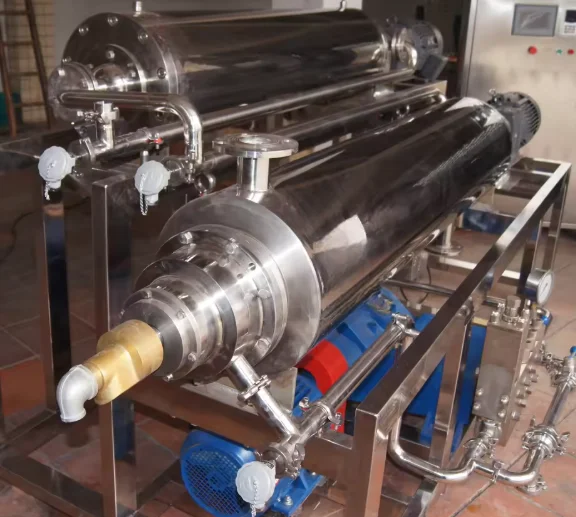
Operating from our state-of-the-art fabrication facilities, we specialize in designing and manufacturing high-efficiency heat transfer systems where two fluid streams come into direct physical contact—completely eliminating the thermal resistance of a traditional tube or plate wall. This direct interface enables maximum thermal efficiency, rapid heat transfer rates, and exceptionally low pressure drops.
Engineered to withstand the Middle East’s harsh operating conditions, our custom-built systems are meticulously fabricated to resist fouling, scaling, and extreme thermal cycling. From localized scaling challenges in hypersaline water desalination plants to massive vapor condensation units in downstream petrochemical complexes, Nordstone delivers robust, cost-effective thermal solutions.
Every unit is strictly manufactured in accordance with strict international codes, including ASME Section VIII, API 660, and ISO 9001:2015 standards. By prioritizing precise fluid dynamics, optimal spray nozzle geometry, and advanced metallurgy, we ensure uncompromised process reliability, minimal operational downtime, and optimal energy efficiency for critical applications across Dubai, Abu Dhabi, and the wider GCC region.
Frequently Asked Questions (FAQs)
1. What is a direct contact heat exchanger, and how does it differ from a standard shell-and-tube exchanger?
A direct contact heat exchanger transfers thermal energy by allowing two immiscible fluids (or a gas and a liquid) to mix directly with one another. Unlike shell-and-tube or plate heat exchangers, there is no physical metal wall separating the streams. This eliminates metallic thermal resistance, completely prevents fouling along tube walls, and significantly lowers both initial capital costs and ongoing maintenance expenses.
2. What are the primary industrial applications for direct contact heat exchangers in the UAE?
In the UAE and GCC region, these systems are extensively utilized in seawater desalination (such as multi-stage flash distillation preheaters), oil and gas vapor recovery units, industrial wastewater treatment, geothermal energy extraction, and heavy petrochemical condensation processes where conventional fouling would cause frequent shutdowns.
3. What specific international manufacturing codes does Nordstone follow?
As an established industrial vessel manufacturer, Nordstone designs and fabricates units strictly compliant with ASME Section VIII (Div 1 & 2), API 660, TEMA standards, and ISO 9001:2015 quality management frameworks. We ensure all vessels are certified to safely manage high-pressure and high-temperature processes.
4. Can these heat exchangers handle corrosive fluids like sour gas or seawater?
Yes. Because the fluids mix directly, we focus heavily on internal hydraulics and select specialized, corrosion-resistant alloys (CRAs) such as Super Duplex stainless steel, Titanium, or High-Nickel alloys for the vessel shell and internal internals (like spray nozzles and packing materials) to withstand high chloride and hydrogen sulfide (H2S) concentrations.
5. What are the main design configurations available?
We manufacture three primary configurations based on process requirements:
- Spray Columns: Where one fluid is atomized into droplets through engineered nozzles into a continuous phase.
- Packed Beds: Utilizing structured or random packing to maximize the interfacial surface area between phases.
- Tray Columns: Where fluid flows downward over a series of perforated trays while vapor flows upward.
6. How does eliminating the physical barrier affect heat transfer efficiency?
Eliminating the tube or plate wall yields a significantly higher heat transfer coefficient. The thermal efficiency approaches 100% of the thermodynamic limit because there is no conductive resistance through metal, allowing for exceptionally narrow approach temperatures (the temperature difference between the leaving streams).
7. Is cross-contamination an issue in direct contact heat exchangers?
Cross-contamination occurs by design because the streams mix. Therefore, these systems are strictly used when the two fluids are either completely immiscible (like oil and water), can be easily separated downstream via gravity decanting, or when one fluid is a condensed vapor of the other stream (such as steam injecting into water).
8. How does Nordstone optimize these units for the extreme ambient temperatures of the UAE?
High ambient summer temperatures affect cooling water baselines. We custom-engineer the internal packing metrics, spray droplet size distributions, and volumetric flow ratios to ensure the heat exchanger maintains its rated thermal duties even when the cooling medium enters at elevated tropical temperatures.
9. What maintenance is required for a direct contact heat exchanger?
Maintenance is significantly lower than conventional shell-and-tube designs because there are no tube bundles to pull, clean, or plug due to leaks. Regular maintenance is primarily confined to inspecting and cleaning the atomizing spray nozzles, checking internal structural packing integrity, and monitoring level control instrumentation.
10. Can Nordstone manufacture custom vessels for high-pressure applications?
Absolutely. Backed by our decades of excellence in heavy industrial fabrication, we possess the engineering expertise and advanced welding capabilities required to manufacture thick-walled pressure vessels capable of operating under extreme pressure variables and heavy vacuum conditions.
11. What is the typical lifespan of a Nordstone-fabricated heat exchanger?
When operated within its designed process parameters and paired with our recommended metallurgy upgrades, a Nordstone industrial vessel boasts an operational lifespan exceeding 20 to 25 years, providing an exceptional return on investment.
12. How do you prevent pressure drop issues within the column?
We utilize advanced computational fluid dynamics (CFD) modeling during the engineering phase. By optimizing the column diameter, gas velocity, and selecting high-voidage structured packing, we minimize gas-phase pressure drops, reducing the overall power consumption of your process blowers or compressors.
13. Do you provide testing and documentation for UAE oil and gas operators?
Yes. We provide comprehensive documentation packages compliant with ADNOC and other regional operator standards. This includes Non-Destructive Testing (NDT) reports (Radiography, Ultrasonic, Dye Penetrant), hydrostatic test certificates, positive material identification (PMI) data, and code-stamping documentation.
14. What parameters are required to get a custom engineering quote?
To deliver an accurate design, our engineering team requires details on the fluid compositions, mass flow rates, inlet and target outlet temperatures, operating pressures, fluid immiscibility/solubility data, and any specific space or layout constraints at your site.
15. How can we initiate a technical consultation or request a quote from Nordstone?
You can easily connect with our senior application engineers, review our past project track records, or submit your comprehensive process data sheets directly by visiting our dedicated portal at Contact Us to receive a prompt technical review.