As a trusted leader among high-temperature & refractory-lined valves – BFG Systems manufacturers in UAE, Nordstone engineers advanced flow-control assets designed specifically to withstand the extreme thermal loads and highly abrasive conditions of Blast Furnace Gas (BFG) networks.
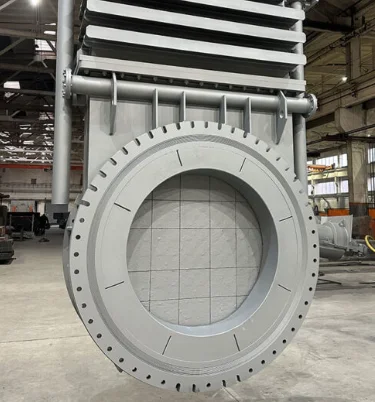
Utilizing premium-grade steel alloys integrated with precise refractory monolithic linings, our custom-engineered valves eliminate thermal degradation and warpage at extreme temperatures while maintaining absolute seal integrity.
Backed by rigorous API, ASME, and ISO certifications, our state-of-the-art manufacturing infrastructure delivers world-class industrial equipment designed to optimize safety, reduce pressure drops, and sustain continuous operational uptime across heavy metallurgical and power plants throughout the Emirates.
To discuss your facility’s specific thermal and pressure challenges or to request custom technical drawings, reach out to our engineering team directly through our Contact Us portal.
Frequently Asked Questions
1. What are high-temperature refractory-lined valves, and why are they used in BFG systems?
High-temperature refractory-lined valves are specialized industrial flow control components built with an internal insulating lining of heat-resistant refractory material. They are critical in Blast Furnace Gas (BFG) systems because raw BFG exits the furnace at extreme temperatures often carrying abrasive dust particles, which would warp, erode, or instantly destroy standard uninsulated metal valves.
2. What typical temperature ranges can Nordstone’s refractory-lined valves handle?
Our engineered valves are designed to withstand continuous operating temperatures ranging from 400°C to over 1100°C. The specific limit depends on the grade of the internal refractory lining and the thermal properties of the structural alloy shell.
3. How does the refractory lining protect the valve body from thermal shock?
The lining acts as a dense thermal barrier that restricts the rate of heat transfer from the hot gas stream to the structural metal casing of the valve. This low thermal conductivity ensures that the outer steel pressure boundary stays below its critical stress-temperature limit, preventing rapid thermal expansion or cracking during sudden process fluctuations.
4. Which industrial standards do Nordstone valves comply with?
Every asset is designed, manufactured, and meticulously tested in compliance with major global certifying bodies, including ASME Section VIII for pressure vessels, ASME B16.34 for valves, API 6D/6FA, and certified quality frameworks under ISO 9001.
5. What materials does Nordstone use for the outer shell of these valves?
We select premium materials based on application severity, routinely utilizing high-strength Carbon Steel (such as SA 516 Gr. 70), Low-Temperature Carbon Steel (LTCS), specialized Stainless Steels (SS304/316 or heat-resistant grades), and advanced Nickel Alloys or cladded configurations for corrosive or sour gas exposure.
6. What types of valves are most commonly refractory-lined for BFG applications?
The most common types include high-performance Butterfly valves (for throttling and isolation), Goggle valves (for absolute tight shut-off during maintenance), Hot Blast valves, and specialized Bleeder or Snort valves used to safely vent or regulate system pressures.
7. How does Nordstone prevent the refractory lining from eroding due to high-velocity particulate dust in BFG?
We incorporate high-density, erosion-resistant refractory compositions reinforced with stainless steel anchors or hex-mesh matrices. This mechanical binding prevents the lining from chipping or spalling when subjected to the high-velocity, abrasive dust streams inherent to steel plant gas cleaning networks.
8. Can these valves be integrated with automated control systems?
Yes. Our high-temperature valves are engineered to couple seamlessly with heavy-duty pneumatic, hydraulic, or electric actuators equipped with smart positioners and limit switches, allowing complete integration into your facility’s centralized SCADA or distributed control systems (DCS).
9. What testing methods are conducted to verify valve safety before delivery?
We carry out extensive non-destructive testing (NDT), including:
- Radiographic Testing (RT) and Ultrasonic Testing (UT) for weld integrity.
- Magnetic Particle (MPI) and Dye Penetrant Testing (DPT).
- High-pressure hydrostatic and pneumatic shell/seat leakage testing to ensure zero-leak performance under extreme service limits. nordstoneng.com
10. How does Nordstone minimize the overall pressure drop across the BFG valve?
Our engineering team utilizes Computational Fluid Dynamics (CFD) analysis to optimize the internal flow path geometry of the valve body and disc. By streamlining the internal profile, we minimize turbulence and pressure drops, reducing energy consumption across the gas distribution network.
11. What is the typical operational lifespan of a Nordstone refractory-lined valve?
With scheduled preventive maintenance and proper process controls, our high-temperature valves are engineered for a design life exceeding 15 to 20 years. The internal refractory linings can be localized, patched, or relined during major plant turnarounds to extend total asset life indefinitely.
12. Are custom configurations available for existing plant footprints in the UAE?
Absolutely. Nordstone specializes in custom engineering. We build bespoke dimensional configurations, flange connections, and face-to-face lengths to precisely match your legacy infrastructure without requiring expensive piping modifications on-site.
13. How does the UAE’s coastal and desert environment impact the external design of the valve?
High ambient humidity, salinity, and airborne dust can accelerate external corrosion. Nordstone counters this by applying multi-coat epoxy or marine-grade polyurethane thermal insulation coatings to the exterior steel casing, providing long-term resistance to atmospheric corrosion.
14. What are the key maintenance requirements for refractory-lined BFG systems?
Maintenance primarily involves periodic visual inspections of the refractory lining via access manways during shutdowns to look for signs of crack propagation or erosion. Actuator linkages should be lubricated regularly, and packing glands checked to prevent external packing leaks.
15. How can we engage Nordstone for a technical consultation or a commercial quote?
You can contact our specialized technical sales and engineering office directly by visiting our dedicated online portal at Contact Us. Provide your specific design data sheets (flow rates, gas composition, operating pressure, and thermal profiles), and our team will deliver a comprehensive technical proposal.