With over 20 years of experience in heavy-duty industrial engineering, Nordstone stands as one of the premier Activated Carbon Filter manufacturers in UAE.
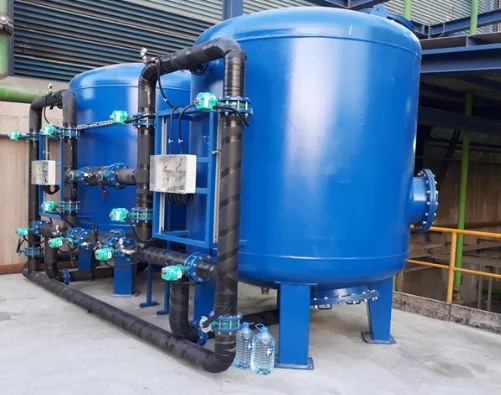
Our precision-engineered carbon bed filtration vessels are custom-designed to handle high-volume industrial water treatment, sour gas sweetening, and volatile organic compound (VOC) removal across critical sectors, including Oil & Gas, petrochemicals, and defense. Fabricated in our state-of-the-art facility using heavy-gauge carbon steel and corrosion-resistant alloys, each filter vessel complies strictly with ASME Section VIII, API, and ISO standards to withstand extreme temperatures and high-pressure industrial environments.
As specialized industrial vessel manufacturers, we optimize internal flow distributors and underdrain collection systems to prevent fluid channeling, ensuring uniform contact time across the active media bed.
Whether you require a standalone deep-bed filtration unit or a fully integrated multi-media skid package, our team of expert engineers delivers bespoke solutions tailored to the strict environmental and operational frameworks of the Middle East. Elevate your process efficiency and ensure long-term mechanical reliability by partnering with regional engineering specialists.
To discuss your project specifics, flow rates, or custom footprint constraints, reach out to our technical team directly through our Contact Us page.
Frequently Asked Questions
1. What makes Nordstone a leading activated carbon filter manufacturer in the UAE?
Nordstone combines over 20 years of industrial pressure vessel manufacturing expertise with a deep understanding of regional compliance frameworks. Our filtration vessels are engineered in accordance with ASME Section VIII and API standards to ensure structural integrity under extreme Middle Eastern environmental conditions, including high salinity, ambient humidity, and thermal fluctuations.
nordstoneng.com
2. Which industrial sectors in the UAE utilize your carbon filtration vessels?
Our heavy-duty carbon adsorption filters are predominantly deployed in Oil & Gas refineries, petrochemical processing plants, municipal water treatment systems, defense installations, and pharmaceutical manufacturing facilities requiring high-purity process fluid filtration.
3. What design codes and certifications do your filtration vessels carry?
Every industrial vessel engineered by Nordstone can be certified under ASME Section VIII (Div. 1 & 2), API 650/620, and ISO 9001, 14001, and 45001 quality management frameworks. We ensure 100% material traceability and provide full mill test certificates (MTCs).
4. How does Nordstone prevent internal corrosion inside the carbon bed vessels?
Activated carbon creates a galvanic corrosion cell when in direct contact with bare steel. To prevent structural degradation, Nordstone applies specialized internal protective linings, such as heavy-duty glass flake vinyl ester, phenolic epoxies, or utilizes corrosion-resistant alloys (CRA) like SS316L, Duplex, or exotic claddings based on your chemical stream composition.
5. Can your systems handle high-pressure and high-temperature gas applications?
Yes. Our engineering team utilizes advanced software such as PV Elite and finite element analysis (FEA) to design heavy-wall vessels capable of operating from full vacuum up to high-pressure thresholds exceeding 100 bar, matching your process requirement safely.
6. What types of contaminants do your industrial activated carbon filters remove?
Our systems are optimized for both liquid and gas phase molecular separation. They successfully remove trace hydrocarbons, volatile organic compounds (VOCs), hydrogen sulfide (H2S), chlorine, color-causing organics, and odor compounds from process streams.
7. Do you manufacture fully integrated, skid-mounted filtration packages?
Yes, Nordstone specializes in turnkey, pre-engineered process skids. We assemble the filter vessels, interconnected piping, automated control valves, instruments, and PLC control systems on a single structural steel frame for fast plug-and-play site deployment.
8. How do you ensure uniform flow distribution across the carbon bed?
To eliminate fluid channeling—which prematurely exhausts sections of the carbon media—we custom-engineer the internal inlet diffusers and lateral underdrain collecting networks using computational fluid dynamics (CFD) analysis.
9. What materials of construction (MOC) are available for your UAE filters?
Depending on the corrosivity of the medium, we build vessels using standard Carbon Steel (e.g., SA 516 Gr. 70), Low-Temperature Carbon Steel (LTCS), Stainless Steels (304L/316L), Duplex, Super Duplex, or nickel alloys like Inconel and Monel.
10. Does Nordstone assist with sizing and media selection for specific flow rates?
Our specialized engineering team evaluates your specific process parameters—including volumetric flow rate, superficial velocity, temperature, contact time (EBCT), and target pollutant load—to precisely calculate optimal bed depth and vessel diameters.
11. What testing parameters do your vessels undergo before delivery to site?
We apply rigorous non-destructive evaluation (NDE) protocols including Radiographic Testing (RT), Ultrasonic Testing (UT), Magnetic Particle Inspection (MPI), and Dye Penetrant Testing (DPT), concluded by high-pressure hydrostatic or pneumatic leakage tests.
12. Can your filters be adapted for automated backwashing cycles?
Yes. Our automated filtration systems feature multi-port valve configurations or individual pneumatic/electric actuator valves tied into a centralized control panel to handle automated backwashing or rinsing steps cleanly.
13. How long do Nordstone industrial filter vessels typically last?
By leveraging premium-grade alloys, precise welding procedures (WPS/PQR), and robust corrosion allowances, our vessels are designed for an operational life expectancy exceeding 20 to 25 years with routine maintenance.
14. What is the typical lead time for custom vessel manufacturing?
Lead times vary depending on vessel dimensions, materials, and specific certification criteria. However, because our Middle East supply chains and local manufacturing capabilities are highly optimized, we offer some of the most competitive project lifecycles in the region.
15. How do we initiate a custom design or receive a detailed technical quotation?
You can share your process datasheets, preferred layout parameters, and compliance expectations directly with our senior engineering division through our Contact Us link or via our official regional corporate channel.