Aker BP Approved Process Skid Suppliers: What the Standard Really Requires
When a modular process skid is destined for a project linked to Aker BP, the Norwegian independent oil and gas company operating production platforms and subsea developments on the Norwegian Continental Shelf, "approved supplier" is not a phrase any fabricator can adopt on its own. It is a specific, audited status that Aker BP grants to individual manufacturers after a formal qualification process. For procurement and engineering teams in Dubai and across the GCC researching Aker BP Approved Process Skid Suppliers, understanding what that process actually involves is far more useful than searching for a badge or a claim on a website.
This article explains what Aker BP vendor approval covers for process skids, the engineering baseline it is built on, and what to check for when qualifying a manufacturer for Aker BP-linked or Aker BP-grade skid packages.
What Vendor Approval Actually Means
Aker BP maintains its own vendor qualification requirements, and getting listed involves a detailed audit of a manufacturer's quality management system, structural frame fabrication, piping and instrumentation integration practices, welding procedures, and documented fabrication history for skid-mounted process packages used across its offshore platform and subsea tie-back processing facilities. That audit is typically carried out by Aker BP's own inspection personnel or by a third-party inspection agency acting on its behalf. The resulting approval is specific to the manufacturer and often to defined skid categories, design codes, and material classes.
Because this status is granted directly by Aker BP to a named manufacturer, it is not something any supplier can claim without going through that process. What buyers researching suppliers can assess independently, before any formal audit, is whether a manufacturer's engineering and quality practices are already built to the level Aker BP-grade skid work requires.
How the Audit Process Works
The audit typically begins with a document review of the manufacturer's quality manual, welding procedures, and past skid fabrication records, followed by an on-site facility inspection covering structural steel fabrication capability, pipe fitting and welding practices, instrumentation and control panel integration, and factory acceptance testing procedures.
What Approval Is Tied To
Approval is rarely a blanket status. It is usually specific to skid type (separation, metering, chemical injection, or utility packages), design code, weight and footprint class, and the process disciplines the manufacturer has demonstrated competence in during the audit.
Why Aker BP-Grade Process Skids Carry Their Own Qualification Demands
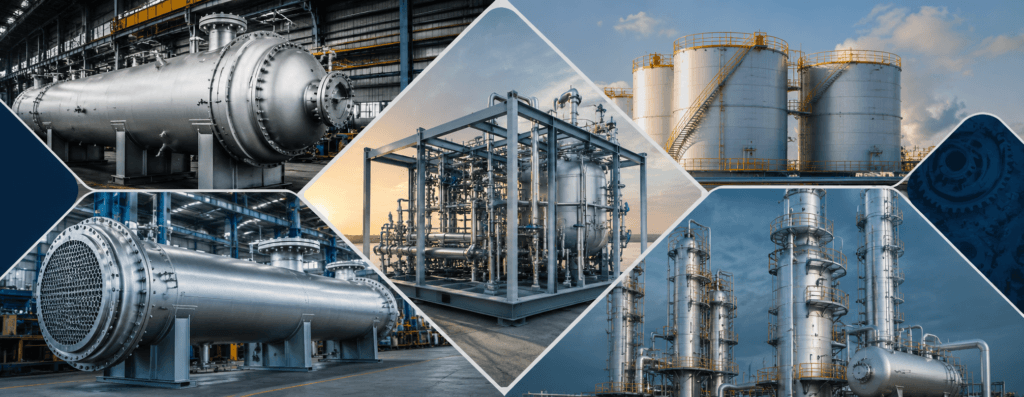
Skids used across Aker BP's offshore platform and subsea tie-back facilities integrate multiple disciplines, mechanical, piping, electrical, and instrumentation, into a single transportable unit that must arrive on the platform ready for tie-in with minimal offshore hook-up work. Unlike a single stand-alone vessel, a process skid involves structural frame design, equipment layout, interconnecting piping, cable tray and control panel integration, and factory testing, all of which must be controlled to a consistent standard from design through shipment and offshore commissioning, with weight and footprint carrying particular importance for topside module space.
That is why skid qualification for Aker BP-linked work places heavy weight on structural integrity, piping weld quality, and full factory acceptance testing before dispatch, rather than only checking the individual components after they arrive at the quayside. A supplier being evaluated for this level of work needs to demonstrate control over the full build sequence: frame fabrication, equipment mounting, piping and instrumentation tie-ins, and final testing and inspection, all traceable under one consistent quality system. This is the same discipline that governs the standalone equipment often mounted onto these skids, including Pressure Vessels and columns, where pressure boundary integrity is equally non-negotiable.
Process Reliability and Site Delivery Considerations
Aker BP-linked skid packages are frequently the primary means of getting complex process functions onto offshore platforms, where structural tolerances, nozzle orientation, and interconnect points matter as much as the individual equipment design, particularly given the limited scope for correction once a skid is installed offshore and tied into upstream and downstream piping. Factory integration of vessels, storage-tanks, and heat-exchanger units onto a single skid frame reduces the amount of offshore hook-up work required within a constrained installation campaign.
Consequences of Fabrication Defects
An undetected structural weld defect or misaligned piping run can surface only after commissioning as vibration issues, leaks, or a failed pressure test, making thorough shop inspection and factory acceptance testing far more valuable than post-installation repair on a live skid within an operating offshore facility.
The Engineering Baseline Behind Aker BP-Grade Process Skids
Regardless of a skid's final destination, the technical requirements underpinning Aker BP-grade fabrication are largely the same requirements that govern quality skid manufacturing generally:
Design Code — ASME Section VIII for pressure-retaining equipment mounted on the skid, ASME B31.3 for process piping, and AISC structural standards for the frame, with NACE MR0175/ISO 15156 material requirements layered on top for sour and corrosive service.
Material Traceability — Full mill test certificates and heat-number traceability for structural steel, piping, and mounted equipment components.
Welding Procedure Qualification — WPS and PQR documentation, with welders individually qualified under ASME Section IX for structural and piping welds.
Non-Destructive Testing — Radiographic or ultrasonic examination of critical piping welds, and magnetic particle or dye penetrant testing of structural connections.
Dimensional and Structural Verification — Frame flatness, nozzle orientation, and lifting point verification checked against approved general arrangement drawings before closeout.
Design Review and Calculations — Code-based design calculations for structural loading, piping stress, and equipment support, reviewed against the specified operating conditions and site requirements.
Factory and Site Acceptance Testing — Full functional and pressure testing of piping and instrumentation loops, confirming the skid is ready for tie-in before it leaves the shop floor.
Third-Party Inspection — Hold-point sign-off from an accredited inspection body such as Lloyd's Register, Bureau Veritas, TÜV, or DNV at critical stages of fabrication and testing.
A manufacturer that applies this level of control as standard practice, not only on projects with a named end client, is generally the one positioned to succeed if and when a formal Aker BP-linked audit takes place.
Where Nordstone Fits
Nordstone designs and manufactures process equipment for the Oil & Gas, Petrochemical, Energy, and Water Treatment sectors, serving Dubai, the wider UAE, GCC, and international markets, with more than 20 years of combined engineering experience across the team. Our fabrication and QA/QC processes are structured around the technical baseline described above: documented material traceability, ASME IX-qualified welding, structural and piping fabrication control, comprehensive NDT, and full factory acceptance testing before handover.
To be clear with buyers researching this topic: formal vendor approval with Aker BP is issued directly by Aker BP to specific manufacturers following its own audit process, and we are not claiming that status here. What we can speak to with confidence is the engineering rigor our process-skids are built to on every project.
Equipment Built to That Standard
process-skids — Factory-assembled modular skids integrating columns, vessels, pumps, piping, and instrumentation.
Pressure Vessels — ASME Section VIII-compliant vessels engineered for safe containment under demanding pressure and temperature conditions.
columns — Distillation, absorption, and stripping columns engineered for process efficiency in refining and petrochemical service.
storage-tanks — API 650/620-referenced tanks for liquids, gases, chemicals, and petroleum products.
reactors — Process reactors engineered for controlled chemical reactions under demanding operating conditions.
heat-exchanger — TEMA-designed shell-and-tube units for heating, cooling, condensation, and energy recovery.
Frequently Asked Questions (FAQs)1. What does "Aker BP approved" mean for a process skid supplier?
It means Aker BP has directly qualified the manufacturer, auditing plant capability, welding, material control, testing procedures, and code compliance specific to its own contracts. It is a formal, client-issued status, not something a manufacturer can claim on its own.
2. How does a skid manufacturer get onto Aker BP's approved list?
Aker BP reviews the manufacturer's QA/QC systems, code compliance (ASME Section VIII, B31.3, and NACE MR0175), material traceability, welding procedure qualifications, testing practices, and inspection records, typically followed by a facility audit.
3. Is Nordstone an Aker BP-approved process skid supplier?
Nordstone is not claiming formal Aker BP-approved status. What we can speak to is our own engineering baseline: code-compliant design, full material traceability, certified welding procedures, structural and piping fabrication control, and third-party NDT and factory acceptance testing documentation, the same baseline vendors need before approval is even considered.
4. What should buyers verify before shortlisting a process skid supplier for Aker BP-linked projects?
Check for current ASME Section VIII, B31.3, and NACE MR0175 compliance, welder and procedure qualifications, material and weld traceability records, factory acceptance testing documentation, references from offshore platform-scale projects, and clarity on approval status versus working toward it.
5. What standards should process skid fabrication follow regardless of approval status?
ASME Section VIII and B31.3 for pressure-retaining equipment and piping, plus NACE MR0175 for sour and corrosive service, with full documentation for materials, welding, structural fabrication, and factory testing, the groundwork any approval process builds on.
Working With Nordstone
If your project requires process skids engineered to international codes and manufactured under documented quality control, our engineering team can review your capacity, process, and site requirements and provide a project-specific proposal. Get in touch with Nordstone to discuss your specifications.
Get In Touch
Recent Posts