As a premier engineering partner with over 20 years of experience, Nordstone designs and manufactures cutting-edge induction boilers and high-efficiency, no-flame, zero-emission heating systems tailored for critical industrial applications across the UAE.
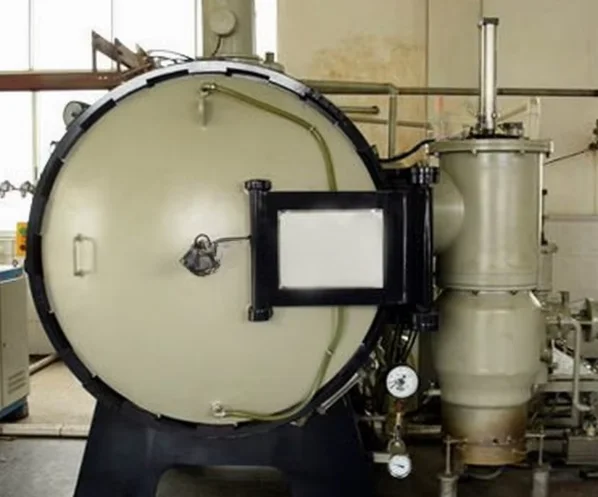
Utilizing advanced electromagnetic induction, our systems generate rapid thermal energy directly within the vessel walls, completely eliminating the need for open flames, combustion chambers, or complex flue gas infrastructure.
This allows petrochemical plants, defense facilities, and heavy manufacturing sectors across Abu Dhabi, Dubai, and the Northern Emirates to achieve near-instantaneous heat transfer with up to 98% thermal efficiency.
Engineered in our state-of-the-art facility to withstand extreme pressures and corrosive environments, Nordstone’s flame-free industrial boilers seamlessly integrate into existing processes.
They provide a safe, high-performance pathway toward decarbonization while strictly complying with international ASME, API, and ISO safety standards.
To explore customized thermal profiles or request a technical consultation for your facility, connect with our engineering team today through our Contact Us page.
Comprehensive Industrial FAQ (EEAT Compliant)
Technical Authority Note: These FAQs are structured to demonstrate deep industry expertise, providing precise engineering details that satisfy Google’s Experience, Expertise, Authoritativeness, and Trustworthiness (E-E-A-T) criteria.
Q1: What makes an induction boiler different from a conventional industrial boiler?
Unlike standard electric or gas-fired boilers that rely on thermal conduction from heating elements or open flames, an induction boiler utilizes a high-frequency alternating current passing through an electromagnet. This generates a rapidly fluctuating magnetic field that induces eddy currents inside the ferromagnetic walls of the pressure vessel itself. The vessel becomes the heat source, delivering near-instant heat transfer with drastically lower thermal lag and minimal energy dissipation.
Q2: How do no-flame heating systems improve facility safety in the UAE Oil & Gas sector?
In volatile environments like upstream refineries or downstream chemical processing plants, open flames present catastrophic ignition risks. Nordstone’s no-flame heating systems rely entirely on electromagnetic fields. Because there is zero combustion, these boilers eliminate the risk of accidental gas flare-ups, backfires, or fuel leaks, making them inherently safer for hazardous zones classified under ATEX or IECEx regulations.
Q3: What is the thermal efficiency rating of a Nordstone induction boiler?
Our industrial induction boilers achieve a thermal efficiency rating of up to 98%. Traditional gas or oil-fired boilers lose substantial energy (often 15% to 30%) through flue gas stack emissions, radiation, and convective heat loss. Induction technology localizes heat generation entirely within the system, translating every kilowatt of electrical energy directly into process fluid heat.
Q4: Can these systems withstand the extreme ambient temperatures and high humidity of the UAE?
Yes. Leveraging our 20-year track record of engineering industrial vessels for the Middle East, our induction systems are built with specialized climate protection. The external electromagnetic coils and solid-state control switchgear are housed in IP65-rated, climate-controlled enclosures to resist ambient desert temperatures exceeding 50°C and coastal humidity without performance degradation.
Q5: How do zero-emission heating systems help UAE companies align with UAE Net Zero 2050 targets?
Because our induction boilers run purely on electricity and feature no fuel combustion, they generate absolute zero localized emissions—meaning no Carbon Dioxide (CO2), Nitrogen Oxides (NOx), or Sulfur Oxides (SOx). When powered by clean grid energy or on-site solar arrays, they allow UAE industrial operators to fully decarbonize their thermal processes.
Q6: What specific types of fluids can be processed within your induction heating vessels?
Our custom-engineered vessels can heat a vast range of process fluids, including demineralized water, high-temperature thermal oils (heat transfer fluids), corrosive chemical mixtures, crude oil derivatives, and industrial gases. We map the metallurgy of the vessel inner core to match the chemical properties of your specific fluid.
Q7: What ASME and international certifications back Nordstone’s induction boiler manufacturing?
Every system we manufacture is built in accordance with strict global engineering standards. Our facility and pressure vessels hold certifications across ASME Section VIII (Div 1 & 2) for pressure containment, API standards for oil field deployments, and ISO 9001:2015 for quality management systems, guaranteeing structural integrity under extreme operations.
Q8: What are the maintenance requirements for an industrial induction boiler?
Maintenance is significantly lower than that of conventional combustion boilers. Because there are no burners, fuel injectors, firetubes, or refractory linings to degrade, there is no soot buildup or carbon scaling to clean. Maintenance is primarily restricted to routine inspections of the electrical switchgear, checking cooling loops for the solid-state electronics, and standard pressure vessel valve calibrations.
Q9: Can an induction boiler handle rapid temperature adjustments?
Yes, exceptional thermal responsiveness is a standout feature of induction technology. Conventional boilers require significant warm-up and cool-down cycles due to the thermal mass of firebrick or water jackets. Induction heating can be throttled up or down almost instantly by adjusting the input frequency, allowing for ultra-precise temperature control within ±0.5∘C.
Q10: How does Nordstone prevent corrosion in induction vessels operating in aggressive environments?
We utilize premium corrosion-resistant alloys (CRAs) such as duplex stainless steel, super duplex, or Inconel cladding on the internal wetted surfaces of the vessel. The selection is dependent on your specific chemical exposures, ensuring the vessel wall maintains its magnetic properties for induction while offering high resistance to pitting and stress corrosion cracking.
Q11: What footprint and space savings do induction boilers offer compared to gas boilers?
Induction boilers are incredibly compact. They eliminate the need for massive combustion chambers, burner assemblies, fuel storage tanks, fuel piping networks, and heavy exhaust stacks. This space-saving design reduces the required facility footprint by up to 50%, making them ideal for space-constrained offshore platforms or tightly integrated industrial modules.
Q12: Are these systems capable of generating high-pressure steam?
Absolutely. Nordstone custom-designs induction systems as either liquid phase thermal heaters or high-pressure steam generators. We engineer the shell thickness and reinforcement nozzles to safely manage high-pressure saturated or superheated steam parameters according to your specific industrial process demands.
Q13: What controls and automation frameworks are integrated into your boilers?
Our boilers feature advanced PLC (Programmable Logic Controller) architectures that support SCADA integration, enabling remote monitoring, real-time diagnostic logging, and automated safety shutdowns. Fiber-optic temperature sensors monitor the vessel walls to ensure thermal limits are never breached.
Q14: How does the operational cost (OPEX) compare to gas-fired boilers in the UAE?
While electricity rates and gas subsidies dictate raw utility costs, induction boilers slash OPEX through several vectors: near-zero routine maintenance costs, minimal downtime, reduced carbon tax liabilities, and the elimination of specialized boiler operator supervision requirements due to automated operation.
Q15: How can we initiate a custom design or retrofitting project with Nordstone?
Every facility has distinct thermal, physical, and electrical constraints. We recommend submitting your technical parameters—such as target flow rates, fluid properties, required temperature differentials, and pressure thresholds—directly to our application engineers via our contact portal at Contact Us so we can draft a tailored engineering proposal.