As a premier name in heavy industrial process equipment engineering, Nordstone leverages over 20 years of experience to stand out among top-tier Dehydration / Drying Columns manufacturers in UAE.
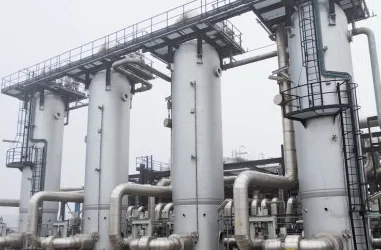
Operating from our state-of-the-art manufacturing facility, our expert engineering team specializes in custom thermal and mechanical designs tailored specifically for critical separation processes.
These heavy-duty industrial columns are meticulously engineered to eliminate moisture, prevent hydrate formation, and suppress corrosion in demanding upstream and midstream operations.
Built to withstand extreme pressures, high temperatures, and severe corrosive environments, our dehydration systems deliver unmatched reliability for the region’s largest processing facilities.
Certified Technical Compliance
Our unwavering dedication to industrial safety, precision engineering, and rigorous quality control is backed by internationally recognized credentials. Every high-performance drying vessel we produce is fully compliant with ASME Section VIII (Div. 1 & 2), API, and ISO standards, ensuring flawless integration into critical Oil & Gas, Petrochemical, and Defence infrastructures across the Middle East.
Frequently Asked Questions
1. What are dehydration and drying columns used for in industrial processing?
Dehydration and drying columns are specialized industrial pressure vessels designed to remove water vapor and moisture from gas or liquid streams (such as natural gas, NGLs, or liquid hydrocarbons). Removing water is critical to prevent pipeline corrosion, avoid the formation of solid gas hydrates that can block lines, and meet strict commercial product purity specifications.
2. What types of dehydration column technologies does Nordstone manufacture?
We design and manufacture both absorption and adsorption-based columns. This includes liquid desiccant contactor towers (typically utilizing Triethylene Glycol or TEG) as well as solid desiccant adsorption vessels (using molecular sieves, silica gel, or activated alumina) configured as multiple-bed systems for continuous operation.
3. Which international design codes and certifications do your columns adhere to?
As a certified manufacturer in the UAE, our columns are engineered and fabricated in strict accordance with the ASME Section VIII Div. 1 & Div. 2 codes, API standards, and ISO 9001 quality management protocols. We also accommodate specific regional standards and international marine/piping codes like TEMA or EN 13445 when required.
4. Can Nordstone columns handle highly corrosive or sour gas environments?
Yes. We specialize in engineering vessels for extreme environments, including sour gas processing (H2S and CO2 heavy streams). We utilize specialized metallurgies such as sour-service carbon steel, stainless steel alloys (SS316L), duplex, super duplex, or apply internal corrosion-resistant alloy (CRA) weld overlay cladding.
5. What design parameters do your engineers require to generate a custom column quote?
To deliver an optimized mechanical and thermal design, we require:
- Inlet gas/fluid composition and flow rate
- Operating and design pressure/temperature
- Water content at the inlet and target outlet moisture dew point
- Preferred desiccant type (liquid glycol vs. solid molecular sieve)
- Site ambient conditions and preferred footprint space limits
6. Do you manufacture modular, skid-mounted dehydration units?
Yes. Beyond standalone columns, Nordstone manufactures completely integrated, pre-engineered Process Skids. These modular systems combine the contactor or adsorption towers with piping, heat exchangers, circulation pumps, reboilers/regenerators, instrumentation, and PLC control systems for rapid deployment and minimal field installation time.
7. What internals are used inside your dehydration and drying towers?
Depending on the processing application, our columns feature high-efficiency internals such as structured or random packing, bubble cap trays, valve trays, mist eliminators (demister pads), and liquid distributors. For solid bed dryers, we engineer robust support grids and screen assemblies to hold the desiccant beds under high velocity.
8. How does Nordstone ensure high quality control during fabrication?
Quality control is embedded into every stage of our production line. We implement a rigorous inspection and testing plan (ITP) that includes 100% material traceability, Non-Destructive Testing (NDT) such as radiographic, ultrasonic, magnetic particle, and liquid penetrant testing, followed by final hydrostatic pressure testing before shipment.
9. What is the operational lifespan of a Nordstone drying column?
With over 20 years of manufacturing experience, our columns are built for long operational life cycles, typically exceeding 20 to 25 years. This durability is achieved through conservative structural design margins, precise corrosion allowances, premium welding procedures, and high-performance external and internal coatings.
10. Can your dehydration columns achieve extreme low-moisture dew points?
Yes. While liquid TEG systems typically reduce water content to around 4 to 7 lbs/MMSCF, our custom-engineered molecular sieve solid desiccant columns are capable of deep dehydration, achieving ultra-low water dew points below -100°C (less than 0.1 ppmv), which is essential prior to cryogenic gas processing or LNG liquefaction.
11. How do you handle thermal expansion and high-temperature cycling in solid desiccant beds?
Solid desiccant columns undergo severe thermal cycling during the regeneration phase (often up to 300°C). We design these vessels with specialized mechanical details, including heavy-duty skirt or lug supports that accommodate thermal expansion, advanced insulation rings, and fatigue-resistant welding details to prevent structural stress cracks.
12. Are your columns suitable for offshore and marine applications in the UAE?
Absolutely. We design and construct columns specifically optimized for offshore platforms and FPSO modules. These units utilize space-saving configurations, wave-motion resistant internal liquid distributors, and specialized offshore marine coating systems to withstand highly saline atmospheric conditions.
13. What is the typical lead time for a custom dehydration column from Nordstone?
Lead times vary depending on the column’s dimensions, wall thickness, metallurgical requirements, and raw material availability. Typically, custom engineered-to-order columns range from 16 to 28 weeks, including complete mechanical design approval, raw material sourcing, fabrication, testing, and documentation delivery.
14. Do you provide installation, commissioning, or field maintenance services?
Yes. Our services extend beyond the factory floor. Our dedicated team of expert field engineers provides supervisory support for site installation, loop checks, pre-commissioning, and full startup commissioning across various facilities in Abu Dhabi, Dubai, Sharjah, and the wider GCC region.
15. How can I submit an RFQ or get in touch with your engineering team?
You can easily reach out to our technical sales and engineering departments to discuss your project requirements, request a quotation, or schedule a technical review by visiting our official technical inquiry page at Contact Us.