As leading polymerization reactors manufacturers in UAE, Nordstone brings over 20 years of precision engineering and manufacturing experience to the Middle East’s rapidly expanding petrochemical, polymer, and chemical manufacturing sectors.
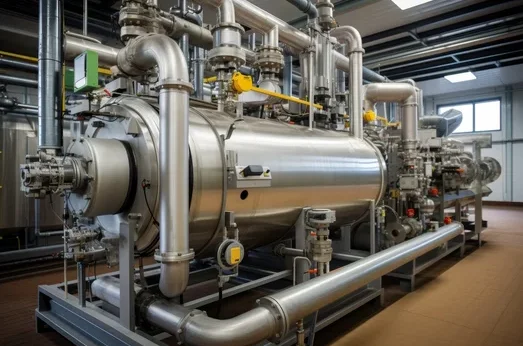
Specializing in highly complex process systems, our state-of-the-art facility designs custom industrial vessels that withstand the extreme exothermic reactions, critical pressures, and corrosive environments inherent in modern polymer production.
Built in strict compliance with international safety codes—including ASME Section VIII (Div. 1 & 2), API, and ISO certifications—our chemical reactors ensure maximum thermal control, uniform mixing, and zero-leakage security.
From initial mechanical calculations and computational fluid dynamics (CFD) optimization to comprehensive non-destructive evaluation (NDE) testing, Nordstone engineers tailor advanced industrial vessels to your precise process requirements, delivering uncompromised operational life and maximum yield efficiency across the UAE.
To discuss your project’s specific processing demands, high-pressure criteria, or exotic material configurations with our engineering team, visit our specialized technical division or connect directly through our dedicated portal to request a detailed design consultation.
Explore Custom Engineering Solutions & Connect with Our Technical Team
Frequently Asked Questions
1. What types of polymerization reactors does Nordstone manufacture in the UAE?
Nordstone designs and builds a diverse range of chemical reactors configured for specific polymer production methods. Our core manufacturing capabilities include Continuous Stirred-Tank Reactors (CSTR) for steady-state production, Batch and Semi-Batch Reactors for high-flexibility applications, and specialized Gas-Phase or Loop Reactors engineered for polyolefin production. Each unit is custom-fabricated based on the specific kinetic, thermodynamic, and viscosity profiles of your chemical process.
2. Which international design codes and manufacturing certifications do your vessels comply with?
Every industrial vessel and reactor manufactured by Nordstone adheres strictly to global safety and quality frameworks. We fabricate in total alignment with standard codes:
- ASME Section VIII Division 1 and Division 2 (for high-pressure design verification)
- API 12J and relevant oil, gas, and petrochemical standards
- ISO 9001, ISO 14001, and ISO 45001 quality, environmental, and safety management systems
- NACE MR0175 / MR0103 compliance for sour gas and highly corrosive environments
3. Can your systems manage highly exothermic polymerization reactions safely?
Yes. Managing internal heat generation is the most critical safety and quality parameter in polymer synthesis. We engineer advanced thermal management systems, incorporating high-efficiency conventional cooling jackets, dimple jackets, or internal cooling coils optimized through thermal simulations. These systems prevent localized overheating (“hot spots”) and runaway thermal reactions, ensuring steady, safe operating parameters.
4. What raw materials and exotic alloys do you use for reactor construction?
To resist chemical corrosion, hydrogen embrittlement, and extreme thermal cycling, we process a broad spectrum of heavy industrial metallurgy:
- Stainless Steel: High-grade SS304/304L, SS316/316L, and specialized Duplex or Super Duplex steels.
- Exotic Alloys: Nickel alloys including Inconel, Monel, and Hastelloy.
- Cladded Options: Base carbon steels (such as SA 516 Gr. 70) featuring corrosion-resistant internal weld overlays or mechanical cladding to reduce raw material costs while preserving chemical resilience.
5. How do your engineering teams optimize mixing and agitation for highly viscous polymers?
High viscosity can cause mass and heat transfer limitations during chemical reactions. Our engineering department performs specialized Computational Fluid Dynamics (CFD) analysis to evaluate flow paths, blade geometries, and impeller configurations (such as anchor, helical ribbon, or turbine agitators). This ensures complete, homogenous mixing and eliminates stagnant zones within the vessel chamber.
6. What pressure and temperature limits can Nordstone reactors withstand?
Our advanced industrial pressure vessels are custom engineered to handle demanding structural operating envelopes. Depending on the mechanical application and wall thickness criteria, we design systems operating from complete full vacuum up to 200 bar of high internal pressure, with safe structural design temperatures ranging from sub-zero cryogenic levels up to +400°C.
7. What non-destructive evaluation (NDE) tests do you perform before delivery?
To fulfill our zero-defect manufacturing philosophy, every reactor undergoes extensive mechanical validation at our facility before deployment. Our internal quality control protocol includes:
- Radiographic Testing (RT) and Ultrasonic Testing (UT) for weld integrity.
- Dye Penetrant Testing (DPT) and Magnetic Particle Inspection (MPI).
- High-pressure Hydrostatic or Pneumatic leak-testing to guarantee complete environmental sealing. nordstoneng.com
8. Do you provide turn-key, skid-mounted polymerization process systems?
Yes. Beyond standalone reactor vessels, Nordstone specializes in engineering fully integrated, shop-fabricated process skids. These come pre-piped, pre-wired, and instrumented with all required heat exchangers, valves, feeding systems, and automated control logic. They are fully factory-tested for swift plug-and-play installation on-site across industrial zones in Abu Dhabi, Dubai, and the Northern Emirates.
9. Why is choosing a local UAE manufacturer advantageous for heavy industrial vessels?
Sourcing process equipment from a local UAE entity provides massive logistical benefits. It eliminates long-distance maritime freight costs and high-risk ocean transit for oversized cargo, shortens procurement lead times, and ensures direct access to local field engineers for site inspection, commissioning support, and routine maintenance compliance.
10. How does Nordstone ensure material traceability and quality compliance?
We enforce a meticulous quality tracking protocol from raw plate acquisition to final product delivery. Every vessel is delivered alongside a comprehensive technical documentation package containing certified Material Test Certificates (MTCs), raw material heat numbers, certified Welding Procedure Specifications (WPS), Procedure Qualification Records (PQR), and official independent third-party inspection sign-offs.
11. Can your reactors be integrated into existing automated plant systems?
Absolutely. Our chemical reactors can be completely outfitted with precision digital instrumentation—including multi-point thermal couples, pressure transmitters, level gauges, and continuous monitoring controls—engineered for seamless integration into your existing distributed control systems (DCS) or SCADA platforms.
12. What industries in the UAE do you serve with these industrial reactors?
With our specialized industrial track record, we support deep-tier processing facilities across the Middle East. This includes primary petrochemical refineries, specialized downstream polymer and plastic manufacturing plants, synthetic fiber production, advanced coatings and adhesives formulations, and strategic defense applications requiring high-durability process vessels.
13. How do you prevent polymer buildup or fouling inside the vessel?
Internal surface finish is essential to minimize residue adhesion. We offer precision internal surface treatments, including mechanical polishing, mirror-finishes, electro-polishing, or specialty protective internal linings (such as advanced glass-flake, phenolic, or epoxy coatings) that minimize fouling and ease the clean-in-place (CIP) process between production batches.
14. What is the typical engineering and fabrication lead time for a custom reactor?
Lead times are highly dependent on the scope of the project, mechanical complexity, and the raw metallurgy required (especially when handling exotic cladded plates). Typically, a custom-engineered ASME-certified reactor spans several months, encompassing mechanical design validation, drawing approvals, specialized welding, non-destructive testing, and final safety certification.
15. How do we initiate a design consultation and request a technical quotation?
To initiate an engineering review for your facility’s polymerization infrastructure, simply share your specific data sheets—including design pressures, operating temperatures, chemical compositions, and volume metrics—with our local technical sales office. Our chemical processing specialists will review your application parameters to develop an optimized structural and financial quote. You can quickly connect with our team and upload your project guidelines through our digital portal at Contact Us.