Nordstone brings over 20 years of precision engineering experience to the UAE, standing as a premier manufacturer of high-performance coil type heat exchangers designed for critical industrial applications.
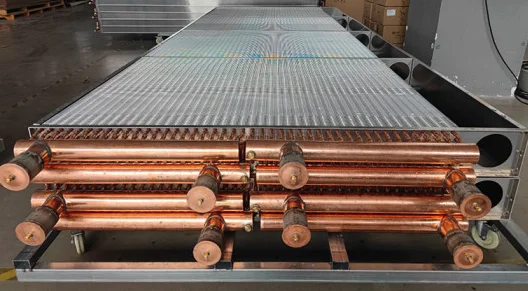
Our state-of-the-art manufacturing facility specializes in custom thermal solutions engineered to withstand the extreme pressures, soaring ambient temperatures, and highly corrosive environments typical of Middle Eastern industrial operations.
Whether servicing the oil and gas sector, chemical processing, or defence industries, Nordstone’s coil type heat exchangers offer an incredibly compact footprint without sacrificing thermal efficiency.
By utilizing advanced helical coil configurations, we maximize the heat transfer surface area within a minimal spatial envelope, making them the ultimate high-efficiency thermal solutions for space-constrained plants.
Built in strict compliance with international standards, including ASME, API, and ISO certifications, every unit undergoes rigorous quality control to ensure unmatched operational reliability, safety, and longevity. Partner with Nordstone to optimize your thermal management systems with bespoke, engineered-to-order heat transfer technology. To discuss your project specifications with our expert engineering team, contact us today.
Frequently Asked Questions (FAQs)
Here are the top 15 highly searched, technically relevant FAQs tailored for the UAE market, addressing engineering, procurement, and operational concerns.
1. What makes coil type heat exchangers more efficient than standard shell and tube designs?
Coil type heat exchangers utilize a helical or spiraled tube configuration. This design induces turbulent flow at much lower fluid velocities and introduces centrifugal forces that enhance fluid mixing (known as Dean vortices). This dramatically increases the heat transfer coefficient, allowing for high-efficiency thermal solutions in a fraction of the physical size of traditional straight-tube heat exchangers.
2. Can Nordstone custom-engineer coil type heat exchangers for extreme UAE environments?
Yes. With over 20 years of manufacturing experience, we specialize in custom thermal solutions. We design systems engineered to handle extreme ambient desert temperatures, high operational pressures, and corrosive marine or industrial environments common across the UAE.
3. What materials of construction (MOC) do you use to combat corrosion?
Depending on your application, we manufacture coils and vessels using heavy-duty, corrosion-resistant alloys. This includes high-grade Stainless Steel (316L), Duplex and Super Duplex steels, Inconel, Hastelloy, and Titanium to ensure long-term durability against sour gas, brackish water, or aggressive chemicals.
4. Which industrial sectors in the UAE benefit most from your compact heat exchangers?
Our primary clients span critical, high-stakes industries including Oil & Gas (upstream and downstream processing), Petrochemicals, Chemical Processing, Power Generation, Desalination plants, and heavy Defence applications.
5. What certifications back Nordstone’s thermal manufacturing process?
Our unwavering dedication to safety and reliability is backed by global industry gold standards. We manufacture in strict compliance with ASME (Section VIII, Div. 1 & 2), API standards, and ISO quality management frameworks.
6. How do helical coil heat exchangers handle thermal expansion?
One of the mechanical advantages of a coil-type design is its inherent structural flexibility. The helical coil acts similarly to a spring, naturally absorbing thermal expansion and contraction cycles caused by rapid temperature fluctuations. This significantly reduces mechanical stress on the tube-to-tubesheet joints, preventing premature fatigue and leaks.
7. Are these heat exchangers suitable for high-pressure and high-temperature applications?
Absolutely. Nordstone designs and manufactures industrial vessels capable of safely operating under extreme pressures and temperatures. The seamless engineering of our coils ensures robust pressure containment for critical thermal applications.
8. What is the typical maintenance and cleaning protocol for coil type heat exchangers?
Because these units induce high fluid turbulence, they naturally resist fouling and scaling compared to standard designs. When maintenance is required, they are typically cleaned using Chemical-in-Place (CIP) methods. For specialized applications, we can design units with removable coil bundles for mechanical inspection.
9. How does the compact footprint of your thermal solutions benefit offshore or modular plants?
Space is at a premium on offshore oil platforms, FPSOs, and skid-mounted modular process plants. Because our coil designs pack a massive heat transfer surface area into a highly compact envelope, they lower structural weight, minimize spatial requirements, and drastically reduce overall installation costs.
10. Can your heat exchangers handle high-viscosity fluids or slurries?
While helical coils are highly efficient for gases and clean liquids, high-viscosity fluids or fluids with heavy particulate matter require precise engineering to avoid excessive pressure drops. Our engineering team custom-calculates fluid dynamics to ensure the optimal coil pitch and diameter for your specific fluid profile.
11. Does Nordstone provide thermal and mechanical design calculations for review?
Yes. As an engineering-first manufacturer, we provide comprehensive design verification, including thermal sizing calculations, mechanical design according to ASME codes, and optional Computational Fluid Dynamics (CFD) analysis to validate performance before fabrication begins.
12. What is the lead time for a custom-built coil type heat exchanger in the UAE?
Lead times vary depending on the complexity of the design, specified alloy materials, and current raw material availability. However, our regional presence and streamlined manufacturing workflows allow us to offer highly competitive lead times across the UAE.
13. How do you ensure quality control during the manufacturing process?
Our meticulous quality control process involves non-destructive testing (NDT), including radiographic testing, ultrasonic testing, hydro-testing, and helium leak testing where required. Every step is fully documented to meet ASME and ISO traceability standards.
14. Do you offer localized technical support and site visits within the UAE?
Yes. Our expert engineers provide comprehensive technical consultation, coordinate project requirements directly with your local engineering teams, and ensure seamless delivery and integration support for your systems.
15. How can we request a technical proposal or quotation for our project?
To get a tailored technical proposal, simply share your process parameters (mass flow rates, fluid properties, inlet/outlet temperatures, and pressure constraints) with our team. Please visit our dedicated page to connect directly with an engineering specialist and contact us today.