Maximize your industrial thermal efficiency with Nordstone, the leading engineering pioneer with 20 years of experience in designing and manufacturing high-performance pressure vessels.
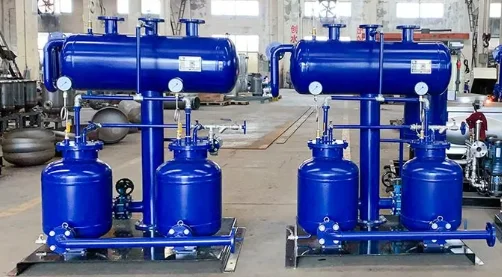
As a trusted condensate recovery tank manufacturer in the UAE, we specialize in custom-engineered thermal solutions that capture, store, and recycle hot condensate back into your boiler feedwater loops. Our state-of-the-art facilities produce heavy-duty boiler & steam pressure vessels designed specifically to withstand the extreme thermal cycling, high pressures, and corrosive environments typical of the Middle East’s Oil & Gas, chemical processing, and manufacturing sectors.
Built strictly to certified API, ISO, and ASME standards, every Nordstone vessel utilizes advanced fabrication techniques and meticulous quality control to eliminate flash steam waste, lower water treatment overheads, and dramatically optimize your plant’s energy conservation footprint.
Technical Specifications & Configurations
To maintain stable operating pressures and minimize thermal shocks across your steam infrastructure, we engineer three core variations of industrial recovery vessels:
| Parameter | Atmospheric Condensate Tanks | Pressurized Condensate Tanks | Industrial Blowdown Tanks |
|---|---|---|---|
| Operating Pressure | Atmospheric (0 Bar) | 0.5 Bar to 3.5 Bar | Up to 10.5 Bar (Inlet Peak) |
| Design Temperature | Up to 100°C | 110°C to 140°C | Up to 180°C (Inlet Fluid) |
| Material Construction | Carbon Steel / SS 304 / SS 316L | ASME Boiler Quality Carbon Steel | Heavy ASTM A516 Grade 70 |
| Orientation Options | Vertical / Horizontal | Horizontal Configuration | Space-saving Vertical |
| Corrosion Allowance | 1.5 mm to 3.0 mm | 3.0 mm Heavy Duty | 3.0 mm + Specialty Internal Coating |
| Level Control System | Magnetic / Heavy-duty Float Switch | Differential Pressure Transmitters | Multi-point Conductivity Proves |
Frequently Asked Questions (FAQs)
1. What is the primary function of a condensate recovery tank in a steam system?
A condensate recovery tank collects the hot water (condensate) that forms when steam transfers its heat energy throughout an industrial process. Instead of draining this treated, high-temperature water, the tank stores and channels it back to the boiler feed system, preserving both thermal energy and water treatment chemicals.
2. Why should industrial plants in the UAE invest in high-efficiency condensate recovery?
The UAE’s harsh operating environments demand strict resource optimization. Recycling hot condensate dramatically slashes fuel usage needed to heat raw water, lowers makeup water procurement costs, and drops expensive chemical water treatment requirements, while reducing overall carbon emissions.
www.silsonboilers.in
3. What design standards do Nordstone boiler and steam pressure vessels follow?
All Nordstone industrial vessels are strictly engineered and manufactured in compliance with international regulatory frameworks, including ASME Section VIII Division 1 & 2 for pressure vessels, alongside applicable API and ISO quality management protocols.
nordstonein.com
4. What materials does Nordstone use to combat internal corrosion?
Depending on the chemical aggressiveness of your system’s steam loops, we fabricate vessels using premium-grade Carbon Steel with enhanced corrosion allowances, Stainless Steel (SS 304, SS 316L), or high-tensile ASTM A516 Grade 70 steel protected by internal specialty coatings.
5. What is the difference between an atmospheric and a pressurized condensate tank?
- Atmospheric Tanks operate at 0 Bar pressure and vent flash steam directly, making them simple and reliable for lower-temperature returns.
- Pressurized Tanks maintain backpressure (typically 0.5 to 3.5 Bar), completely trapping flash steam within the loop to recover maximum thermal energy without venting losses.
6. How does a condensate recovery tank improve overall boiler efficiency?
By feeding the boiler with pre-heated condensate rather than cold makeup water, the boiler encounters significantly less thermal stress. This steady, high-temperature feed water input shortens the steam generation cycle and slashes fuel consumption.
www.silsonboilers.in
7. Can Nordstone custom-engineer tanks for highly restricted plant footprints?
Yes. Supported by our state-of-the-art manufacturing facility and expert design engineers, we tailor both horizontal and vertical structural configurations to integrate flawlessly with your specific spatial constraints and existing piping connections.
nordstonein.com
8. What capacities are available for Nordstone condensate recovery systems?
We manufacture standard and bespoke process units ranging in capacity from compact 500-liter buffer designs up to heavy-industrial 20,000-liter storage systems engineered for cross-sector applications.
9. Do your steam pressure vessels undergo non-destructive testing (NDT)?
Absolutely. To maintain our unwavering standards of safety and reliability, every pressure vessel undergoes a rigorous quality control process, including Radiographic Testing (RT), Ultrasonic Testing (UT), Magnetic Particle Testing (MT), and final Hydrostatic pressure testing.
10. How does a blowdown tank differ from a traditional recovery tank?
While a recovery tank aims to salvage clean water and heat, an industrial blowdown tank safely intercepts the high-pressure, high-temperature water discharged from the boiler bottom to clear out accumulated sludge and dissolved solids, safely cooling the fluid before disposal.
11. What types of level control monitoring are integrated into your vessels?
We outfit our systems with premium, durable instrumentation—ranging from magnetic visual level gauges and mechanical float switches to automated differential pressure transmitters—enabling real-time monitoring and seamless integration into plant DCS/PLC setups.
12. What industries benefit most from Nordstone’s steam pressure vessels?
Our heavy-duty process equipment actively serves critical fields across the Middle East, including Oil & Gas refineries, petrochemical plants, heavy manufacturing, food processing installations, industrial laundries, and textile factories.
nordstonein.com
13. How does high-temperature condensate return prevent thermal shock in boilers?
Introducing cold makeup water directly into a hot boiler shell causes sharp localized temperature drops, leading to metal fatigue and weld cracking over time. Returning hot condensate keeps feed temperatures stable, prolonging the boiler’s structural lifespan.
www.silsonboilers.in
14. What after-sales and deployment support does Nordstone offer in the UAE?
We provide comprehensive technical consultation, site alignment engineering, connection verification support, and professional asset maintenance routines across all emirates to guarantee long-term operational reliability.
15. How can we request a custom quote or technical evaluation for our system?
You can easily reach out directly to our engineering division by visiting our dedicated portal at Contact Us to upload your project specification datasheets, and our technical sales team will assist you with a comprehensive proposal.