Nordstone is a premier choice for engineering excellence, bringing over 20 years of experience to the design, fabrication, and supply of heavy-duty industrial process systems.
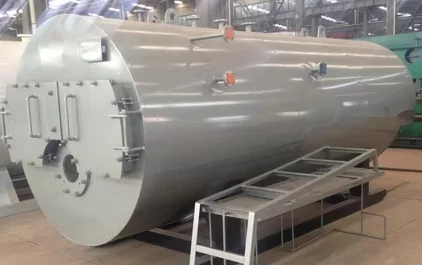
As specialized Steam Drum – Boiler & Steam Pressure Vessels manufacturers in UAE, we engineer high-performance steam distribution systems capable of enduring the region’s most demanding thermal and mechanical conditions. Our state-of-the-art production facilities build highly critical phase-separation units designed to operate safely under extreme pressures and volatile temperatures. Engineered to comply with rigorous international standards—including ASME Section VIII Div. 1 & 2, API, and ISO regulations—every boiler drum and pressure unit undergoes comprehensive non-destructive testing (NDT), hydrostatic checks, and precise structural validation.
Whether supporting upstream oil and gas separation, regional power generation plants, or heavy manufacturing infrastructure, our team of expert engineers provides tailored, custom-engineered configurations that optimize thermal efficiency, eliminate liquid carryover, and provide absolute operational reliability across the Middle East.
Frequently Asked Questions
1. What role does a steam drum play in industrial boiler systems?
A steam drum serves as the primary processing hub in a water-tube boiler system. It separates saturated steam from liquid boiler water, manages fluctuating thermal loads, and acts as a central reservoir. By collecting the mixed-phase fluid from the boiler riser tubes, it segregates clean steam from moisture before directing it to the superheater or distribution line, preventing liquid carryover into downstream machinery.
2. Which manufacturing codes do you use for UAE heavy industries?
We fabricate our boiler and steam pressure vessels strictly according to global standards, primarily the ASME (American Society of Mechanical Engineers) Section VIII Division 1 & Division 2 and ASME Section I for power boilers. We also comply with API and ISO frameworks, ensuring our products fulfill the absolute regulatory safety and compliance structures required across municipal and industrial sectors in the United Arab Emirates.
3. What materials are chosen to resist high pressures and temperatures?
To safeguard against hydrogen embrittlement, high-temperature oxidation, and thermal stress, we utilize certified, premium-grade metals. These include high-tensile carbon steels like SA516 Grade 70, low-alloy chrome-moly steels such as SA387 (Grades 11 and 22) for high-temperature resilience, and heavy corrosion-resistant materials including 316L Stainless Steel, Duplex, or custom clad overlays for aggressive chemical conditions.
4. How do you prevent internal corrosion and pitting inside the vessels?
We handle internal corrosion via a multi-layered approach: selecting resilient alloy grades, specifying strict corrosion allowances (typically 1 mm to 3 mm), executing specialized interior surface passivation or electropolishing, and adding specialized protective internal linings when requested. This structural defense is paired with standard chemical deaeration and water treatment protocols on-site to limit long-term pitting.
5. What internal components are engineered inside a Nordstone steam drum?
To ensure high-purity steam separation, our steam drums feature advanced internal hardware layouts. These include primary cyclonic separators or baffle plates to knock down heavy water surges, followed by secondary stage wire-mesh demister pads or chevron vane droplets separators. We also integrate internal feed-water distribution pipes, continuous blowdown lines, and anti-vortex plates.
6. Can your steam drums handle volatile or rapidly shifting thermal cycles?
Yes, our engineering team designs vessels explicitly tailored to cycle safely under variable operational swings. By running Finite Element Analysis (FEA) and advanced thermal stress modeling during the design phase, we optimize wall thickness and nozzle reinforcements to safely mitigate the physical expansion and contraction stresses caused by sudden industrial load changes.
7. What types of quality control and non-destructive testing do you perform?
We operate a strict zero-defect manufacturing environment. Every pressure vessel undergoes a comprehensive suite of quality assurance tests, including:
- Radiographic Testing (RT) and Ultrasonic Testing (UT) for weld integrity.
- Magnetic Particle Inspection (MPI) and Dye Penetrant Testing (DPT) for surface defects.
- Full hydrostatic pressure testing up to design-mandated safety margins.
- Third-party inspections (TUV, DNV, BV, or Bureau Veritas) to verify complete structural safety.
8. What custom options do you offer for restricted space installations in the UAE?
We specialize in custom industrial solutions. Our engineers develop tailormade vertical or horizontal steam drum configurations, optimized nozzle positionings, structural support leg variations (skirt, saddle, or lug mountings), and modular skid-mounted integration blocks. This ensures the equipment installs cleanly into pre-existing plant spaces or heavy utility rooms with minimal field downtime.
9. Why is preventing liquid carryover critical for steam turbines?
Liquid carryover—when water droplets escape with outbound steam—can cause catastrophic mechanical damage to downstream steam turbines, valves, and piping networks. Droplets hit high-speed turbine blades causing severe erosion, thermal shock, and mineral scaling. Our internal separation systems ensure the ultra-dry steam purity required to keep expensive downstream equipment running smoothly.
10. Do you provide complete skid-mounted boiler and pressure assemblies?
Yes, we provide fully integrated, modular process skid packages. We assemble the pressure vessel, connected piping arrays, structural steel framing, thermal insulation, safety relief valves, level instrumentation, and localized PLC/SCADA control enclosures directly within our shop. The factory-tested assembly is then shipped straight to your site for rapid installation and fast commissioning.
11. What design pressures and temperature limits can your vessels reach?
Our custom engineering capacity allows us to manufacture steam vessels operating across a wide envelope, ranging from low-pressure utility vessels to ultra-high-pressure applications clearing 100 bar to 200 bar+. Our thermal engineering thresholds extend from lower sub-zero fluid environments up to extreme process temperatures reaching +400°C and beyond, depending on the alloy selection and code specification.
12. How does Nordstone optimize fluid dynamics inside a pressure vessel?
We use advanced Computational Fluid Dynamics (CFD) modeling software to simulate two-phase flow conditions (steam and water) inside the vessel. This analysis maps fluid velocities, tracks residence time, ensures uniform inlet distribution, and checks that internal separation components aren’t overloaded during peak plant throughput.
13. What instrumentation packages come integrated with your systems?
To give operators full visibility and absolute control, our steam drums can be supplied with advanced instrumentation arrays. These feature magnetic or reflex glass level gauges, high-accuracy guided-wave radar level transmitters, differential pressure sensors, thermal indicators, independent high-low water alarms, and automated blowdown control valves.
14. What after-sales and deployment support do you offer across the UAE?
We provide comprehensive logistical and technical field support. This includes providing complete manufacturer’s data reports (MDR), inspection test plans (ITP), operating manuals, and structural foundation detail schemes. Our regional technical representatives offer specialized oversight for field positioning, alignment validation, testing, and final start-up commissioning.
15. How do I request a technical proposal or engineering quote?
To receive a tailored technical proposal, detailed drawings, and an accurate financial quotation for your project requirements, you can submit your process flow diagrams, design pressures, temperatures, and dimensional limitations directly to our technical sales division through our official portal.
To discuss your custom technical specifications, dimensional requirements, or specific certification compliance needs with our expert engineering team, please visit our team directly via our Contact Us page.