As a leading name among bladder/diaphragm tank manufacturers in UAE, Nordstone leverages over 20 years of engineering experience to design and manufacture high-performance industrial vessels for critical process applications.
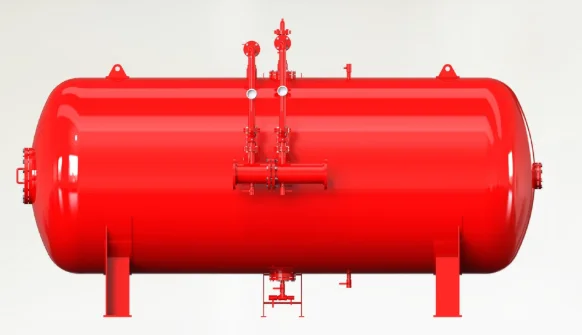
Operating under extreme pressures, intense temperatures, and highly corrosive environments, our heavy-duty bladder and diaphragm expansion tanks provide essential surge protection, pressure regulation, and thermal expansion control across the UAE’s core sectors, including Oil & Gas, Petrochemicals, Water Treatment, and Heavy Manufacturing.
Engineered with meticulous quality control in our state-of-the-art manufacturing facility, every vessel is built to safely isolate processed fluids from compressed gas cushions using premium-grade, highly resilient internal elastomeric membranes.
Backed by world-recognized API, ASME, and ISO certifications, our custom engineering solutions meet and exceed both domestic regulations and strict international safety standards, ensuring long operational lifespans and unmatched plant safety across the Middle East.
To discuss your project parameters, select custom material configurations, or request a technical quote, please visit our Nordstone Contact Page.
Frequently Asked Questions
1. What is the fundamental difference between a bladder tank and a diaphragm tank?
The primary difference lies in the physical design and serviceability of the internal elastomeric membrane. In a bladder tank, the process liquid is contained entirely within a replaceable, balloon-like bladder that does not touch the tank’s internal steel walls. In contrast, a diaphragm tank features a fixed, non-removable membrane slice anchored across the middle of the vessel, dividing it into distinct fluid and gas chambers.
2. How do these tanks accommodate high-pressure industrial environments in the UAE?
Nordstone engineers these pressure vessels utilizing thick, high-tensile carbon steel or specialized stainless steel alloys in strict compliance with the ASME Boiler and Pressure Vessel Code (Section VIII). This structural integrity allows our tanks to safely withstand high industrial operating pressures, while internal nitrogen cushions absorb system pressure spikes.
3. Which certifications do Nordstone bladder and diaphragm tanks carry?
Our manufacturing facilities and engineering processes hold major global industrial credentials, including ASME (U and R stamps), API (American Petroleum Institute) specifications, and ISO 9001:2015 quality management systems. These ensure absolute compliance with major UAE civil defense, municipal, and energy sector procurement mandates.
nordstonein.com
4. What types of internal membranes or elastomer materials do you offer?
We customize internal membranes based on chemical compatibility and working temperatures. Options include Butyl, EPDM (Ethylene Propylene Diene Monomer), Nitrile (NBR), and Viton (FKM) to handle water distribution, hydrocarbon processing, aggressive chemical matrices, or high-temperature steam recovery setups.
5. Why are bladder and diaphragm tanks vital for UAE desalination and water treatment plants?
In large-scale water treatment and desalination infrastructure, these tanks act as critical surge protection assets. They minimize hydraulic shockwaves (water hammer) caused by sudden pump starts or valve closures, preserving downstream pipeline networks and preventing catastrophic pipe bursts.
6. Can Nordstone tanks withstand the highly corrosive, saline coastal environments of the UAE?
Yes. Outside of using corrosion-resistant alloys like Duplex or 316L Stainless Steel, Nordstone applies advanced, industrial-grade external coatings, such as multi-layer epoxy systems and polyurethane finishes, which are proven to resist UV degradation, extreme ambient heat, and high-salinity marine environments.
7. How does a nitrogen pre-charge improve bladder tank performance compared to atmospheric air?
Nitrogen is an inert gas that does not contain moisture or oxygen. Using a nitrogen pre-charge eliminates internal oxidative corrosion of the tank shell, prevents degradation of the elastomeric membrane, and maintains a highly stable pre-charge pressure across fluctuating ambient temperatures.
8. Are your bladder and diaphragm tanks safe for potable (drinking) water applications?
Absolutely. For drinking water networks and food processing facilities across the GCC, we utilize specialized EPDM or butyl bladders that comply fully with international food safety certifications, ensuring no chemical leaching or alteration of water quality occurs.
9. What custom engineering capacities can Nordstone manufacture?
With our expansive, state-of-the-art manufacturing facility, we offer full design flexibility ranging from compact horizontal expansion vessels for commercial HVAC loops up to massive, heavy-duty vertical surge vessels engineered for industrial petrochemical skids.
10. How often should the pre-charge pressure of a diaphragm or bladder vessel be verified?
For major industrial and infrastructure applications across the UAE, we recommend inspecting the pre-charge pressure at least once every six months. This scheduled check-up ensures the expansion space remains properly balanced, preventing bladder over-stretching or premature system cycling.
11. Can the internal bladder be replaced if it wears out over time?
Yes, our specialized bladder tanks feature top-flanged or bottom-flanged openings that allow the internal bladder to be fully extracted and replaced during routine turnaround maintenance without needing to scrap the entire steel pressure vessel.
12. What are the signs that a tank’s internal membrane has failed?
Common indicators of a ruptured membrane include rapid pump short-cycling (turning on and off too frequently), unpredictable fluctuations in system line pressure, or water leaking from the air-charging valve (Schrader valve) when tested.
13. Do you provide turn-key skid integration for these vessels?
Yes. Beyond standalone tank fabrication, Nordstone specializes in engineering completely integrated process skids, fully equipped with matching valves, piping manifolds, monitoring instrumentation, and electronic control loops for easy plug-and-play field installation.
nordstonein.com
14. What non-destructive testing (NDT) do your vessels undergo before delivery?
To maintain our rigorous quality assurance standards, every vessel undergoes exhaustive non-destructive testing, which can include Radiographic Testing (RT), Ultrasonic Testing (UT), Hydrostatic Pressure Testing (typically at 1.3 to 1.5 times the design pressure), and Dye Penetrant Testing (PT).
nordstonein.com
15. How do I start a custom tank design configuration with Nordstone?
You can outline your exact operational specifications, including design pressures, minimum/maximum temperatures, fluid properties, and sizing constraints, by connecting directly with our engineering advisory unit via the official Nordstone Contact Page.